Documents and Qualifications You Need
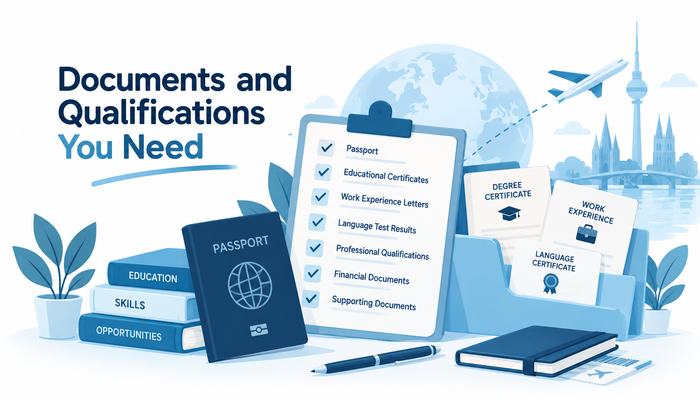
Documents and Qualifications You Need Before Moving Abroad
When I first started preparing to move abroad, I thought the document side would be simple.
Passport.
Degree.
CV.
Maybe a few bank statements.
Done.
Then I started researching actual immigration and employment requirements and realized that having a document and having a document that is usable for a specific process are two very different things.
Your degree may need recognition or assessment.
A document may need translation.
Your work experience may need formal evidence.
A professional qualification may be treated differently in another country.
Some documents may need certification or authentication.
Others may need to be recently issued.
And what you need for immigration may be different from what you need for employment, university admission, professional licensing or everyday administration after arrival.
That's why I stopped asking:
“Which documents do I need to move abroad?”
and started asking:
“Which documents do I need for each stage of my relocation?”
That small change made the entire process much easier to organize.
There Is No Universal Immigration Document List
This is the first thing to understand.
There isn't one folder of documents that works for every international move.
Requirements can vary based on:
Destination country
Nationality
Immigration pathway
Purpose of relocation
Profession
Education
Family situation
Employer
University
Length of stay
Individual circumstances
Someone moving to study may need admission-related documents.
Someone moving for employment may need an employment contract and professional evidence.
A regulated professional may need qualification recognition or licensing.
Someone moving with family may need additional civil documents.
So use general document lists as preparation tools—not as final application checklists.
Your final checklist should come from the current official requirements for your specific pathway.
Start With Five Document Categories
Instead of keeping one enormous list, I would divide everything into five categories:
1. Identity and civil documents
2. Education and qualifications
3. Employment and professional experience
4. Financial and immigration documents
5. Destination-specific or pathway-specific documents
This makes it much easier to see what's missing.
1. Identity and Civil Documents
Your identity documents are the foundation of almost every relocation process.
Depending on your situation, relevant documents may include:
Passport
National identity document
Birth certificate
Marriage certificate
Divorce documents
Documents relating to children
Name-change documents
Other civil-status records
The exact requirements vary.
Don't simply check whether you possess them.
Check:
Is the document valid?
Does the information match my other records?
Is my name spelled consistently?
Could translation be required?
Could certification, legalization or another form of authentication be required?
Does the document need to have been issued recently?
Small inconsistencies can create unnecessary complications later.
Check Your Passport Earlier Than You Think
A passport feels like the easiest item on the list.
But I would check it at the very beginning.
Look at:
Expiry date.
Available pages if relevant.
Name spelling.
Condition.
Whether your intended process has particular passport-validity requirements.
Don't wait until you're close to applying to discover that renewing your passport changes your timeline.
And if you do renew it during the process, keep records of your previous passport if they may be relevant to previous visas, travel history or applications.
2. Education and Academic Qualifications
For many work, study and skilled-migration pathways, education is a major part of the application.
Useful records may include:
Degree certificates
Diplomas
Academic transcripts
Vocational qualifications
Professional certificates
Training certificates
Course records
Documents from previous institutions
But again:
Owning a degree doesn't automatically mean the destination will evaluate it exactly as you expect.
That leads to one of the most important concepts in international relocation.
Qualification Recognition and Comparability
A qualification can serve several different purposes.
It may be relevant to:
Immigration eligibility.
Employment.
University admission.
Professional licensing.
Salary classification.
These processes aren't necessarily identical.
For example, Germany distinguishes between regulated and non-regulated professions when discussing recognition of foreign professional qualifications. In regulated professions, recognition can be necessary to work in the profession, while requirements differ for non-regulated professions. Germany's official recognition portal
Germany's government-backed Make it in Germany portal also provides guidance on when recognition of foreign qualifications can matter for employment and immigration.
The broader lesson applies beyond Germany:
Don't ask only:
“Is my degree recognized?”
Ask:
“Recognized for what purpose?”
Regulated vs Non-Regulated Professions
This distinction can completely change your preparation.
A regulated profession generally has legal requirements governing who can practice or use a particular professional title.
Depending on the country, examples may include areas such as:
Healthcare.
Teaching.
Law.
Architecture.
Certain technical professions.
Other licensed occupations.
For these careers, immigration permission and professional permission can be separate issues.
You might have a valid immigration pathway but still need to complete a recognition, registration or licensing process before performing certain professional activities.
That's why researching the job market isn't enough.
If your profession may be regulated, investigate the competent authority for that profession in your destination.
3. Work Experience Documents
This was another area I initially underestimated.
A CV describes your experience.
It doesn't necessarily prove it.
For immigration, professional recognition or employment purposes, you may need evidence such as:
Employment reference letters
Employment certificates
Contracts
Payslips
Tax or social-insurance records where relevant
Job descriptions
Promotion records
Self-employment documentation
Client contracts or invoices where applicable
The exact evidence depends on the process.
But there is one thing I would do much earlier:
Request employment records before leaving your current country.
Getting a detailed reference from an employer can be easy while you're still working there.
Trying to obtain it three years later from another country can be much harder.
Make Your Employment Evidence Specific
Imagine your CV says:
Marketing Manager — 2022–2025
That's useful for a recruiter.
But another process may need more.
For example:
Exact employment dates.
Hours or employment status.
Responsibilities.
Employer details.
Position title.
Evidence that the employment was paid.
The requirements vary, so don't ask employers to produce random letters.
First check what your intended process actually requires.
Then request evidence that matches it.
Self-Employment Requires Extra Organization
If you've been self-employed, freelance or running a business, proving professional experience may require different evidence.
Depending on the process, useful records could include:
Contracts.
Invoices.
Business registration.
Tax records.
Banking evidence.
Client letters.
Project documentation.
Again, don't assume every document will be accepted for every purpose.
The goal is to create a clear, consistent record of what you actually did.
4. Language Qualifications
Being able to speak a language and being able to prove your language ability are different things.
A program may require:
A particular test.
A particular minimum score.
Specific performance in individual skills.
A certificate issued by an accepted provider.
A result within a certain validity period.
Before paying for a language exam, check:
Which tests are accepted?
Which level or score is required?
Does each skill have a minimum?
How long will the result remain usable for the relevant process?
Do I need the result before applying?
Taking the wrong test can cost both money and months.
5. Financial Documents
Having enough money and proving you have enough money can also be different.
Depending on your pathway, financial evidence may include things such as:
Bank statements.
Savings evidence.
Income evidence.
Scholarship documentation.
Sponsorship evidence.
Employment income.
Other accepted financial records.
Don't move a large amount of money around immediately before an application simply because you assume a bank balance is all that matters.
Check the specific financial-evidence rules for your pathway.
And remember that an immigration financial requirement is not necessarily the same as a realistic relocation budget.
You may satisfy an official requirement and still not have enough money for a comfortable move.
Immigration Money vs Real-Life Money
I would calculate both separately.
Immigration Requirement
Whatever financial evidence your specific pathway officially requires.
Real Relocation Budget
Your actual expected costs:
Documents.
Applications.
Travel.
Temporary accommodation.
Deposit.
First rent.
Household setup.
Transportation.
Food.
Insurance.
Emergency savings.
For example, imagine someone has €12,000 available and meets the relevant financial condition for their pathway.
But their relocation plan requires:
€2,000 documentation and travel.
€3,500 housing and setup.
€1,800 monthly essential expenses.
After setup, they have €6,500 remaining.
That's only around 3.6 months of essential expenses.
The official requirement and personal financial readiness answer different questions.
6. Job Offer and Employment Documents
For pathways connected to employment, you may need documents relating to the job.
Depending on the country and route, these could involve:
Employment contract.
Binding job offer.
Employer information.
Job description.
Salary.
Working conditions.
Professional qualification evidence.
Additional employer documentation.
Don't assume that any job offer automatically satisfies an immigration pathway.
The employment may need to meet specific conditions.
Before making major decisions, check the current official requirements for the exact work route you're considering.
7. University and Study Documents
Students may need another set of records.
Potential examples include:
Admission letter.
Previous degrees.
Academic transcripts.
Language evidence.
Financial evidence.
Insurance.
Accommodation-related evidence where required.
Tuition-related documents.
Other institution or immigration documents.
University admission and immigration permission are also separate processes.
Being admitted to a university does not automatically mean every immigration requirement has been satisfied.
Build separate checklists for:
University admission
and:
Immigration/residence process
Then identify which documents overlap.
8. Family Documents
Moving with a partner or children can add another layer of documentation.
Depending on the pathway and country, relevant records might include:
Marriage certificates.
Birth certificates.
Custody-related documentation.
Consent documentation.
Partner qualifications.
Partner employment records.
Financial evidence.
Insurance.
School records.
Medical or vaccination records where relevant.
The exact requirements can vary substantially.
Family relocation shouldn't be treated as simply adding more airline tickets to an individual immigration plan.
Each person's documentation needs to be considered.
9. Police, Health and Insurance Documents
Some immigration pathways may involve additional requirements relating to areas such as:
Police certificates.
Medical examinations.
Health insurance.
Vaccination records.
Other health documentation.
Do not obtain these too early simply because you saw them on someone else's checklist.
Some documents may need to meet timing, validity, provider or procedural requirements.
First verify whether they're required for your case and when they should be obtained.
Translation, Certification, Apostille and Legalization Are Not the Same Thing
This terminology confused me initially.
They're different processes.
Translation
Converting a document into another language, sometimes subject to requirements about who performs the translation.
Certified Copy
A copy whose conformity with the original has been formally confirmed under the relevant process.
Apostille
A form of authentication used between countries participating in the Hague Apostille Convention for documents covered by that convention.
Legalization
A different authentication process that may apply in situations where an apostille is not applicable.
The Hague Conference on Private International Law provides official information about the Apostille Convention.
Don't decide yourself that a document “probably needs an apostille.”
Check the receiving authority's instructions.
You can waste significant money authenticating documents that weren't required—or use the wrong process entirely.
Practical Example: Amir's Document Folder
Imagine Amir is preparing for a skilled move abroad.
He has:
A bachelor's degree.
Six years of engineering experience.
A language certificate.
A spouse.
Several previous employers.
Initially, his folder contains:
Passport.
Degree.
CV.
Bank statement.
Then he creates a requirement-based document map.
Identity
Passport — ready.
Marriage certificate — may require preparation depending on pathway.
Education
Degree — ready.
Transcript — needs to be requested.
Qualification status — needs verification.
Employment
Employer A reference — ready.
Employer B reference — too vague.
Employer C — no formal letter yet.
Language
Certificate — available, but validity and acceptance need checking.
Financial
Savings — available.
Required format and timing of evidence — needs verification.
Professional
Engineering profession — needs research to determine whether recognition or regulation matters for his intended role.
Suddenly, Amir has a much more useful picture.
He doesn't have a “document problem.”
He has several specific tasks.
That's much easier to solve.
Create a Document Master Tracker
I would use a spreadsheet with these columns:
Document | Purpose | Official Requirement Checked? | Translation? | Authentication? | Expiry/Timing | Status |
Passport | Immigration | Yes | No | No | Check validity | Ready |
Degree | Qualification | Yes | Check | Check | — | Ready |
Transcript | Assessment | Yes | Check | Check | — | Requested |
Work reference | Experience | Yes | Check | Check | — | Missing |
Language test | Eligibility | Yes | No | No | Check validity | Planned |
The key column is:
Purpose.
If you don't know why you need a document, don't spend money preparing it yet.
Keep Digital and Physical Copies
I learned not to rely on one folder.
Create secure digital copies of important records.
Use clear filenames.
For example:
Passport_Current.pdf
Bachelor_Degree.pdf
University_Transcript.pdf
Employment_Reference_CompanyA.pdf
Language_Certificate.pdf
Avoid:
scan004-final-new2.pdf
Also consider keeping appropriate physical copies where useful.
The goal is to be able to retrieve an important document quickly—even during travel or after moving.
Check Name Consistency Across Documents
This sounds minor until it isn't.
Compare:
Passport.
Degree.
Birth certificate.
Marriage certificate.
Employment records.
Language certificate.
Other official documents.
Look for differences in:
Name order.
Middle names.
Transliteration.
Spelling.
Surname changes.
Don't independently alter official documents.
If inconsistencies exist, investigate how the relevant authority expects them to be handled.
Don't Let Documents Expire While You Wait
Immigration planning can take months or years.
Some evidence may have validity or timing requirements.
Create a separate list:
Time-sensitive documents
Then record:
Issue date.
Expiry date.
Application deadline.
When to renew or request again.
This prevents the painful situation of finally becoming ready to apply and discovering that one important document is no longer acceptable.
Common Mistakes With Immigration Documents
Using a Generic Online Checklist as the Final Authority
Your pathway's official requirements should determine your final list.
Translating Everything Immediately
Verify what actually requires translation and the accepted translation method.
Assuming Your Degree Automatically Counts
Recognition, comparability or professional regulation may matter.
Relying Only on a CV for Work Experience
Some processes require stronger evidence.
Requesting Employment Letters Too Late
Former employers can become difficult to contact.
Ignoring Document Validity
Some records may be time-sensitive.
Mixing Immigration and Relocation Requirements
A document needed for an apartment isn't necessarily an immigration document.
Keeping Only Physical Originals
Secure digital organization can save enormous stress.
Using Outdated Requirements
Document rules and procedures can change.
What Nobody Tells You About Preparing Immigration Documents
The difficult part isn't usually finding your passport.
It's coordinating documents across different systems.
One authority wants your education.
Another needs employment evidence.
A professional regulator may evaluate your qualification differently.
An employer wants a CV.
A university wants transcripts.
An immigration authority may require another set of evidence.
The same person is being evaluated for different purposes.
That's why copying another immigrant's folder is dangerous.
Their route may look similar to yours while requiring completely different evidence.
This is one of those stages where speaking with someone who recently completed a similar move can save a lot of trial and error.
Ask them:
“Which document took longest to obtain?”
“What did you prepare too early?”
“Which document did you unexpectedly need after arrival?”
“Did your qualification create any problems with employers?”
Then verify any formal requirements they mention through the relevant official authority.
Lived experience can tell you where the friction is.
Official sources tell you what the current rules are.
Documents and Qualifications Checklist
Identity
Passport checked
Birth certificate available if relevant
Marriage or civil-status documents available if relevant
Children's documents organized if applicable
Name consistency checked
Education
Degree certificates collected
Academic transcripts collected
Vocational qualifications collected
Recognition requirements researched
Professional regulation checked
Employment
CV updated
Employment history documented
Reference letters requested
Contracts or supporting records organized
Self-employment evidence prepared if applicable
Language
Accepted test identified
Required score or level checked
Test date planned
Certificate validity checked
Financial
Official financial requirement checked
Required evidence format checked
Relocation budget calculated separately
Emergency fund planned
Preparation
Translation requirements verified
Certification requirements verified
Apostille/legalization requirements verified
Time-sensitive documents identified
Digital backups created
Physical originals stored safely
Conclusion: Build Your Document Folder Around Your Pathway
The biggest lesson I learned about immigration documents was simple:
Don't collect documents. Build evidence.
Start with your specific pathway.
Find the current official requirements.
Then ask what each requirement needs you to demonstrate.
Identity.
Education.
Professional experience.
Language.
Finances.
Employment.
Family circumstances.
Other pathway-specific conditions.
Only then should you decide which documents need translation, certification, recognition, authentication or renewal.
And remember that immigration eligibility is only one side of the preparation.
Your qualification may also affect whether you can actually work in your profession after arrival.
That's especially important for regulated occupations.
So before moving, I would want to know two things:
“Can this documentation support my immigration pathway?”
and:
“Can these qualifications support the career I want after I arrive?”
Those are different questions.
Answering both before relocation can save months of unnecessary stress later.
FAQ
What documents do I need to immigrate to another country?
Requirements depend on the country, nationality and immigration pathway. Common categories include identity, education, employment, language, financial and family documents, but your final checklist should come from current official instructions.
Do I need my degree translated when moving abroad?
Possibly, but not always. Translation requirements depend on the receiving authority and purpose. Check the specific instructions before paying for a translation.
Will my foreign degree automatically be recognized?
Not necessarily. Recognition or comparability requirements vary by country, profession and purpose. Regulated professions may have additional requirements before you can work professionally.
Do I need proof of work experience?
Some immigration, employment or recognition processes may require evidence beyond a CV, such as reference letters, employment certificates, contracts or other records. Check the requirements of your specific process.
Do immigration documents need an apostille?
Some documents used internationally may require an apostille, legalization or another authentication process, while others may not. Follow the receiving authority's instructions rather than assuming every document needs authentication.
Should I prepare all my documents before choosing an immigration program?
Organizing core records early is useful, but avoid paying for translations, authentication or assessments until you know which pathway you're pursuing and what it specifically requires.
How should I organize immigration documents?
Create a master tracker showing each document, its purpose, required preparation, validity and status. Keep secure digital copies with clear filenames and safely store important originals.