How to Prepare for Your Migration Journey
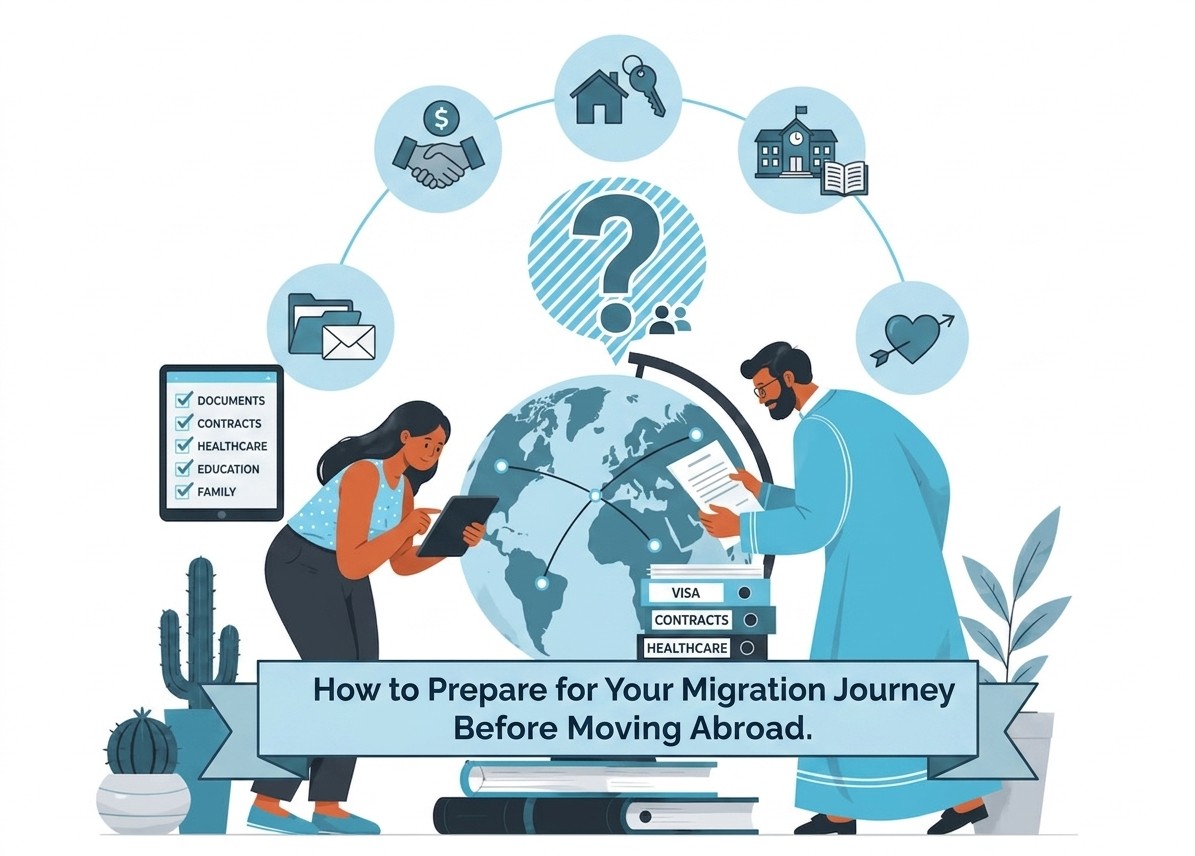
How to Prepare for Your Migration Journey Before Moving Abroad
Moving abroad often looks easier from a distance.
You choose a country, find an immigration pathway, prepare your documents, book a flight, and start your new life.
Then the real preparation begins.
Suddenly, there are questions that have nothing to do with your visa: Where will you live? How much money will you actually need? What if you don't find a job immediately? Will you need the local language every day? How will you build a social life? What happens if the city you chose doesn't feel right after six months?
These questions are why preparing for migration needs to go beyond paperwork.
A successful relocation isn't simply about getting permission to move. It's about preparing for the practical reality of living somewhere new.
Whether you're considering Germany, Spain, Italy, or another destination, the strongest preparation combines official information with realistic financial planning and firsthand experience.
You don't need to predict everything that will happen.
You need to reduce the number of surprises you could have prepared for.
Table of Contents
What Does Preparing for Migration Really Mean?
Start With Your Reason for Moving
Research the Country—and the City
Separate Immigration Preparation From Relocation Preparation
Build a Financial Plan Before You Leave
Research Housing Before Arrival
Look at Work and Income Realistically
Prepare for Language and Everyday Life
Decide What to Take With You
Prepare for the Emotional Side of Migration
Moving Abroad Alone vs. With Family
Common Mistakes Before Moving Abroad
What Nobody Tells You About Migration
Practical Examples
Lessons Learned Before Starting Your Migration Journey
Pre-Migration Checklist
Conclusion
FAQ
What Does Preparing for Migration Really Mean?
Preparing for migration means preparing for life after arrival, not simply preparing to enter a country.
A practical relocation plan should cover:
Immigration and administrative requirements
Finances
Housing
Employment or education
Language
Transportation
Healthcare and everyday services
Social connections
Emotional adjustment
These areas are closely connected.
For example, your profession may influence which cities make sense for you. Your city affects rent. Rent affects your savings. Your savings determine how long you can manage without stable income. Language ability can influence both your employment options and your ability to handle everyday tasks.
That means migration planning isn't a collection of unrelated tasks.
It's a chain of decisions.
Before you leave, try to understand how those decisions affect one another.
Start With Your Reason for Moving
Before comparing countries, get clear about why you want to move.
"Better life" may be the feeling behind your decision, but it isn't specific enough to help you choose between destinations.
Your actual priorities might be:
Career growth
Higher earning potential
Education
International experience
A different lifestyle
Independence
Family opportunities
Long-term relocation
A change in your environment
These priorities can lead to completely different choices.
Someone moving primarily for career development may care most about the job market, salary, professional opportunities, and language requirements.
Someone moving for lifestyle reasons may put more weight on climate, housing, social life, affordability, and work-life balance.
Ask yourself these questions
Before committing to a destination, write down:
What exactly do I want migration to change?
What am I willing to sacrifice?
What are my non-negotiables?
How much financial uncertainty can I tolerate?
How long could I realistically live away from my existing support network?
Am I planning a temporary move or a long-term relocation?
What would make me decide the move isn't working?
The final question is particularly important.
If you don't define what success looks like before leaving, it becomes much harder to evaluate your decision later.
Research the Country—and the City
One of the biggest mistakes future expats make is researching a country without researching the specific place where they will actually live.
Germany is not one housing market. Spain is not one lifestyle. Italy is not one job market.
Munich and Leipzig can offer very different experiences. Barcelona and Valencia can have different housing pressures and daily rhythms. Milan may feel very different from a smaller Italian city.
Research cost of living
Don't rely on one generic "cost of living" number.
Build a city-specific budget that includes:
Rent
Utilities
Groceries
Transportation
Phone and internet
Insurance and other recurring costs relevant to you
Eating out
Leisure
Deposits
Initial household expenses
Then compare that budget with your expected income.
Research your actual job market
A country's overall employment situation doesn't tell you whether your profession is in demand.
Search for your occupation and experience level.
Look at:
Demand for your profession
Typical salary ranges
Language expectations
Qualification requirements
Professional recognition where relevant
Relevant employers
Competition
Location of available jobs
Research housing
Find out:
Typical rent in your target neighborhoods
How competitive the market is
What documents are commonly requested
What upfront costs may apply
Whether temporary accommodation is realistic
How long your commute might be
And don't just read listings.
Talk to people who have actually rented there.
A person who has gone through the process can often explain practical difficulties that aren't obvious from a housing website.
This is one of those situations where speaking with an experienced expat mentor can save you considerable trial and error.
Separate Immigration Preparation From Relocation Preparation
One of the most important distinctions to make is between immigration preparation and relocation preparation.
They overlap, but they are not the same thing.
Immigration preparation asks:
"What do I need to do to enter and remain in the country under the relevant rules?"
This may involve documents, applications, appointments, qualifications, financial evidence, insurance, or other requirements depending on your circumstances.
Relocation preparation asks:
"What do I need to build a functioning life once I'm there?"
That includes:
Housing
Finances
Employment or education
Transportation
Language
Daily expenses
Social connections
Practical routines
Getting your immigration pathway organized doesn't automatically prepare you for the second list.
Country-specific rules can change, and requirements differ by nationality, pathway, and personal circumstances. Always verify current information with the relevant official authorities before making decisions.
Build a Financial Plan Before You Leave
Money is one of the areas where optimism can cause real problems.
Many people calculate their normal monthly expenses and stop there.
But your first weeks may be considerably more expensive than your eventual routine.
You could have temporary accommodation, deposits, transportation costs, household purchases, document-related expenses, or a longer-than-expected period without income.
Divide your finances into three stages
Stage | Expenses to consider |
Before departure | Documents, travel, flights, insurance, moving costs |
First weeks | Accommodation, food, transportation, deposits, essentials |
Normal routine | Rent, utilities, groceries, transportation, recurring costs |
Then ask yourself:
"How long can I support myself if my original timeline doesn't work?"
That question is more useful than simply asking how much money you need.
Build three scenarios
Create:
Optimistic: Everything goes according to plan.
Realistic: Some things take longer than expected.
Difficult: Your job search or housing search takes significantly longer.
If your plan only works in the optimistic scenario, it needs more financial flexibility.
A financial buffer isn't wasted money.
It buys you time to make better decisions.
Research Housing Before Arrival
Housing can become one of the biggest sources of stress after moving abroad.
An apartment may look affordable until you understand the upfront costs. A neighborhood may look attractive until you calculate the commute. A listing may look perfect until you discover how competitive the application process is.
Before departure, research:
Average rents in your target area
Neighborhoods within your budget
Transportation connections
Temporary accommodation
Common rental requirements
Deposits and upfront costs
Commute times
Whether your circumstances require a local address for certain practical or administrative steps
If permanent housing isn't realistic immediately, make a temporary plan.
Your first accommodation doesn't have to be your long-term home.
Sometimes spending a little more time in temporary accommodation gives you the opportunity to understand the city before committing to a long-term rental.
Look at Work and Income Realistically
Salary figures are easy to find.
What is harder is understanding what that salary will actually mean for your life.
Instead of asking:
"How much can I earn?"
Ask:
"How much will remain after my essential expenses?"
A simple starting point is:
Expected income − essential monthly expenses = estimated disposable income
Then test different situations.
What happens if your starting salary is lower than expected?
What happens if you need several months to find suitable employment?
What happens if your first job isn't in your preferred field?
A good migration plan doesn't assume you'll immediately land the perfect job.
It gives you enough flexibility to make your next decision without financial panic.
Prepare for Language and Everyday Life
Language preparation is often discussed only in terms of employment.
But language can affect almost every part of daily life.
It can influence your ability to:
Communicate with landlords
Understand everyday correspondence
Navigate public transportation
Handle banking and services
Speak with professionals
Make friends
Participate in local life
You may not need fluency before leaving.
But waiting until you arrive to start learning can make an already complicated transition harder.
Even basic knowledge can give you more independence and confidence.
And if you plan to stay long term, ask yourself whether you are willing to invest seriously in the local language.
That decision can affect your experience far beyond your first few months.
Decide What to Take With You
Packing for migration is different from packing for a holiday.
At the same time, you don't need to transport your entire previous life.
Divide your belongings into four groups:
Category | What to do |
Essential documents | Keep accessible and securely backed up |
Difficult-to-replace personal items | Prioritize carefully |
First-weeks essentials | Bring enough for your initial period |
Easily replaceable items | Consider buying them after arrival |
Important documents deserve particular attention.
Keep physical copies where appropriate and secure digital backups. Make sure you can access essential information without depending entirely on a single suitcase, device, or account.
Prepare for the Emotional Side of Migration
This is one of the most underestimated parts of relocation.
Moving abroad can be exciting and difficult at the same time.
You can be thrilled about leaving and still miss home.
You can enjoy your new city and still have lonely evenings.
You can believe that moving was the right decision and still question it occasionally.
Those experiences don't automatically mean you've made a mistake.
You're adjusting to a new environment while simultaneously rebuilding familiar routines.
Prepare your support system before you leave
Think about:
Who you can call when things are difficult
Communities you could join
Professional networks
Hobbies you can continue
Ways to stay connected with family and friends
Don't wait until loneliness becomes overwhelming before thinking about your social life.
Moving Abroad Alone vs. With Family
The right preparation depends heavily on who is moving.
Moving alone
You may have greater flexibility with:
Housing
Employment
Location
Daily routines
But you may also have greater responsibility for your finances and emotional wellbeing.
Prioritize:
Emergency savings
Temporary accommodation
Social connections
Practical support
Backup plans
Moving with family
You may have more immediate emotional support, but the move usually involves more coordination.
Consider:
Housing requirements
Education or childcare
Employment for other adults
Transportation
Healthcare
Family routines
Different expectations about the move
Neither option is automatically easier.
The question is what your particular household needs to make the move sustainable.
Common Mistakes Before Moving Abroad
Choosing a country based mainly on social media
Photos can show you beautiful neighborhoods without showing rent, bureaucracy, commuting, or everyday costs.
Treating the visa as the finish line
The immigration process is only one part of relocation.
Underestimating initial expenses
Your first month can look very different from your normal monthly routine.
Assuming you'll find work immediately
A backup financial plan is especially important if your income depends on finding a job after arrival.
Ignoring the local language
You may manage initially, but language can significantly affect independence and integration.
Researching the country instead of the city
The city and neighborhood you choose will shape your daily life much more directly.
Expecting migration to solve everything
A new country can provide opportunities, but it doesn't automatically solve career uncertainty, loneliness, relationship problems, or dissatisfaction.
You're changing your environment, not becoming a completely different person.
What Nobody Tells You About Migration
Migration is rarely one enormous decision.
It's hundreds of small decisions.
Where will you live?
How will you commute?
Where will you shop?
How will you meet people?
What will you do if your first job doesn't work out?
What happens when something goes wrong and nobody around you knows your history?
These decisions are easy to overlook because familiar life handles them automatically.
After moving, they require conscious effort.
That's why good preparation isn't about eliminating uncertainty.
It's about reducing the number of decisions you'll have to make while you're already adapting.
There's another important reality:
The country you imagine before moving may not be the country you experience as a resident.
That's normal.
Tourists experience destinations differently from residents. The first few months can also feel different from life after you've built routines, friendships, and familiarity.
The goal isn't to find a country that matches an idealized image.
It's to find a place whose real conditions are compatible with the life you want.
Practical Examples
Moving to Germany for work
Imagine you receive a job offer in Germany.
It's tempting to focus entirely on the employment paperwork.
A stronger preparation plan would also investigate:
Housing near your workplace
Monthly expenses
Transportation
Language expectations
Temporary accommodation
Financial reserves
Workplace culture
First administrative priorities
The job is an important part of the move, but it isn't the entire move.
Moving to Spain for lifestyle reasons
If you're attracted to Spain because of its climate and lifestyle, don't stop at travel experiences.
Compare:
Rent
Employment opportunities
Income
Transportation
Language
Social environment
Seasonal differences
Long-term affordability
A place can be wonderful for a two-week holiday and still require careful consideration as a long-term home.
Moving to Italy with limited savings
If your financial reserves are limited, don't build your plan around finding work and permanent housing immediately.
Consider:
Temporary accommodation
A realistic employment timeline
Emergency savings
A backup budget
What you'll do if the first plan changes
That's not pessimism.
It's resilience.
Lessons Learned Before Starting Your Migration Journey
1. Research the life, not just the country
Read about ordinary life, not only tourist attractions and national statistics.
2. Don't confuse excitement with readiness
Being excited to move is valuable motivation, but it doesn't replace preparation.
3. Protect your financial flexibility
Savings aren't just about paying bills. They give you choices when reality changes.
4. Choose according to your priorities
There is no universally best country for expats.
The right destination depends on the life you want to build.
5. Learn from people who have already moved
Official sources are essential for current rules.
Experienced expats add another layer: practical context, mistakes, surprises, and lessons learned.
6. Have a Plan B
A backup plan doesn't mean you expect to fail.
It means you've considered what you'll do if your first option takes longer, costs more, or isn't the right fit.
Pre-Migration Checklist
Before choosing a country
Define your reason for moving
Identify your non-negotiables
Compare countries and specific cities
Research your profession
Calculate realistic living costs
Research housing
Consider language requirements
Speak with experienced expats
Before departure
Verify current official requirements
Organize important documents
Create secure digital backups
Calculate initial costs
Build a financial buffer
Arrange temporary accommodation if necessary
Research transportation
Start learning the local language
Create a first-month budget
Prepare a backup plan
Before your first day abroad
Know where you will stay
Know how you'll reach your accommodation
Have access to emergency funds
Keep important contacts accessible
Know your first practical priorities
Have a reliable way to communicate with people back home
Give yourself time to adjust
Conclusion
Preparing for migration isn't about creating a perfect plan.
There isn't one.
Your job search may take longer than expected. Your first apartment may not be ideal. Your expenses may be higher than you calculated. The city you chose may feel different once you're actually living there.
Good preparation doesn't prevent every problem.
It gives you enough information, money, flexibility, and perspective to handle those problems without feeling completely unprepared.
Before you leave, look beyond the immigration process. Research the city where you'll actually live. Understand your finances. Investigate housing and employment realistically. Start preparing for the language and everyday routines. Think honestly about the emotional side of leaving your familiar environment.
And don't underestimate firsthand experience.
Someone who has already made the move can often point out the small realities that aren't obvious in official instructions or general relocation guides.
You don't need to copy someone else's migration journey.
But you also don't have to learn every lesson the hard way.
FAQ
How far in advance should I prepare for moving abroad?
There is no universal timeline. Your preparation period depends on your destination, immigration pathway, finances, profession, family situation, and how much research you have already done. Start early enough to investigate practical issues before you are forced to make decisions under pressure.
What should I research before moving abroad?
Research the specific city where you plan to live, including housing, cost of living, employment opportunities, salary expectations, transportation, language, healthcare, and everyday lifestyle. You should also verify the immigration and residence requirements that apply to your circumstances.
How much money should I save before moving abroad?
There is no single amount that works for everyone. Calculate your relocation costs, first-month expenses, and normal monthly budget. Then consider how long you could support yourself if finding housing or employment takes longer than expected.
Is getting a visa enough to prepare for migration?
No. An immigration or residence pathway is only one part of relocation. You also need to prepare for housing, finances, employment or education, transportation, language, and daily life.
Should I learn the local language before moving?
If possible, yes. You may not need fluency before departure, depending on your circumstances, but basic language skills can make everyday life easier. If you plan to stay long term, language learning should be part of your broader relocation strategy.
Should I move abroad alone or with family?
That depends on your circumstances. Moving alone can offer greater flexibility but may require more financial and social preparation. Moving with family can provide an established support system while creating additional housing, education, employment, and logistical considerations.
What is the biggest mistake people make before moving abroad?
One common mistake is focusing almost entirely on the immigration process and treating it as the finish line. In reality, obtaining a pathway to move doesn't automatically prepare you for housing, work, finances, language, or everyday life.
Should I talk to experienced expats before moving?
Yes. People who have already relocated can provide practical context that official sources and general online research often don't cover. Their experiences can help you identify potential challenges, set more realistic expectations, and avoid repeating mistakes they have already made.
How do I know whether a country is right for me?
Start with your own priorities. Compare your career goals, finances, lifestyle preferences, language ability, housing options, and long-term plans against the actual conditions in each destination. The best country isn't necessarily the most popular one; it's the one that fits the life you want to build.
ژ