The Expectations That Didn't Match Reality
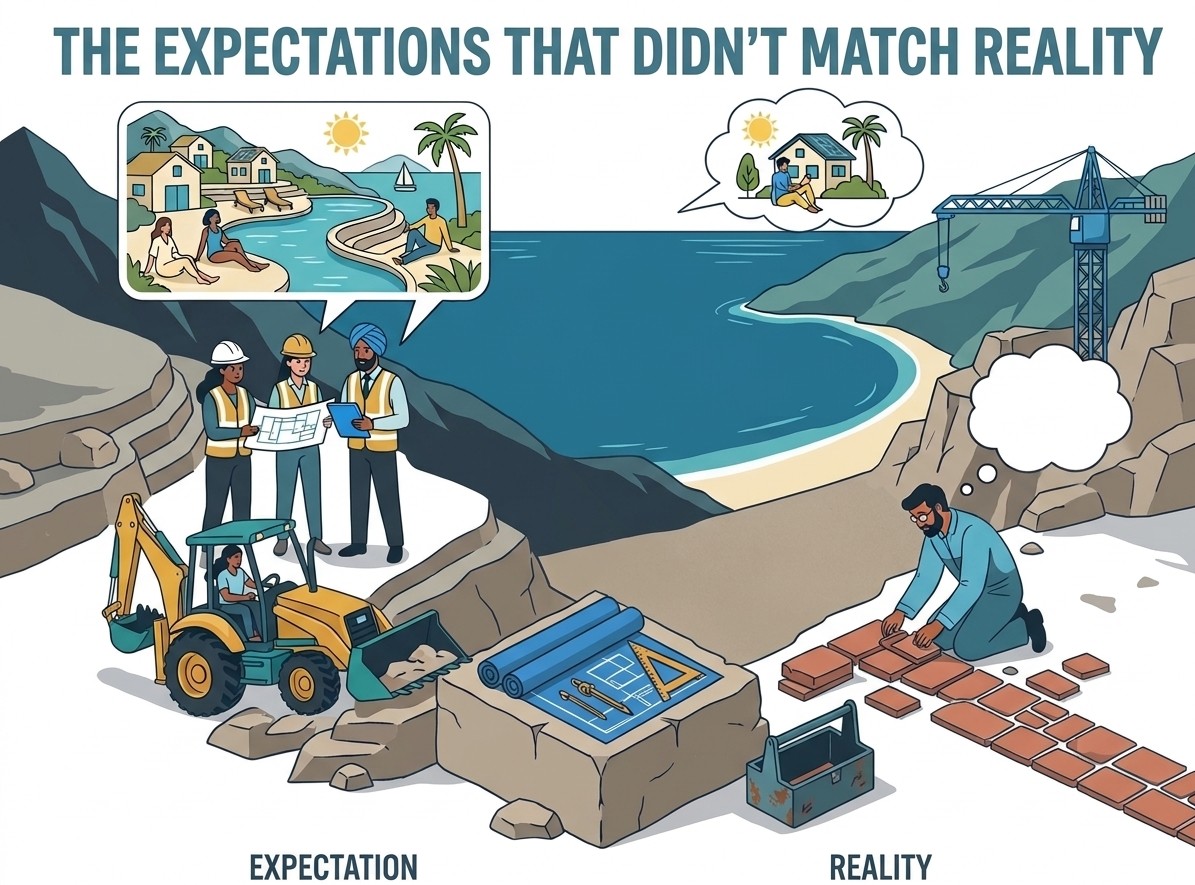
The Expectations That Didn't Match Reality When Moving Abroad
Moving abroad often starts with a clear picture of the life you're going to have.
You imagine the apartment, the job, the new friends, weekend trips, and the feeling of finally getting a fresh start.
Maybe you've watched videos about Germany and imagined an organized, comfortable routine. Maybe you've heard stories about Spain and pictured a more relaxed social life. Or perhaps Italy attracted you because of its culture, food, history, and lifestyle.
None of those expectations are necessarily wrong.
They're just incomplete.
The reality of moving abroad is rarely as perfect as social media makes it look. But it is also rarely as terrible as the worst expat stories suggest.
You might find a better career opportunity and still struggle to find housing. You might love your new city's lifestyle and miss your family. You might meet plenty of people but take months to build genuine friendships.
That's why preparing to move abroad involves more than documents, money, and packing.
You also need to prepare for the gap between expectation and reality.
The goal isn't to become pessimistic. It's to understand which parts of your relocation plan are based on facts, which are assumptions, and what you'll do if things don't happen according to schedule.
Table of Contents
Why Expectations About Moving Abroad Often Don't Match Reality
"I'll Find a Good Job Quickly"
"Finding an Apartment Will Be Easy"
"My Salary Will Make Life Comfortable"
"I'll Make Friends Easily"
"I Already Know the Culture"
"Everything Will Feel Better Once I Move"
"I'll Feel Settled Within a Few Months"
Germany, Spain, and Italy: Why Reality Can Differ
Practical Example: Turning Expectations Into a Realistic Plan
Common Mistakes Future Expats Make
Lessons You Can Learn From Experienced Expats
What Nobody Tells You About Moving Abroad
Pre-Move Reality Check Checklist
FAQ
Conclusion
Why Expectations About Moving Abroad Often Don't Match Reality
Most people don't make relocation decisions based entirely on facts.
They combine research with imagination.
You might know the average salary for your profession, but you're also imagining how different your life will feel once you're earning it.
You might research average rent, but assume you'll find a suitable apartment at that price.
You might know that learning the local language is useful, but assume English will be enough for everyday life.
You might read that a country offers a good quality of life and assume you'll automatically feel happier there.
These assumptions are normal. Problems start when they become guarantees in your mind.
Before moving, divide your expectations into three categories:
Question | Example |
What do I know? | My profession has opportunities in my target city. |
What am I assuming? | I'll find a suitable job within two months. |
What if I'm wrong? | I have enough savings to continue searching. |
That third question is often forgotten.
A strong relocation plan isn't one where everything goes perfectly. It's one that still works when something takes longer, costs more, or turns out differently than expected.
"I'll Find a Good Job Quickly"
One of the most common assumptions about moving abroad is that a strong economy automatically means an easy job search.
It doesn't.
Your experience can depend on your profession, qualifications, language skills, industry, location, professional network, and the hiring market when you apply.
Even a strong CV doesn't guarantee a quick offer.
You might apply for several positions before getting an interview. You may discover that employers expect local-language skills. Your previous experience may be understood differently by local employers. Or you may accept a position that isn't your ideal role simply to get established.
A more realistic expectation
Instead of:
"I'll move abroad and quickly find a better job."
Think:
"My skills may give me opportunities in the local market, but the search could take time, so I need a realistic strategy and enough financial flexibility to handle delays."
Before moving, research actual job postings in your profession.
Look at:
Qualifications employers request
Language requirements
Experience requirements
Salary ranges
Relevant opportunities in your target city
Whether your previous experience is commonly recognized
This gives you a much more useful picture than simply searching for the "best countries for jobs."
"Finding an Apartment Will Be Easy"
Apartment websites can make relocation housing look deceptively simple.
You find a listing.
You apply.
You move in.
In reality, housing can be one of the most frustrating parts of moving abroad.
You may encounter competition from other applicants, unfamiliar documentation requirements, deposits, limited availability, or prices that are higher in the neighborhoods you actually want.
There's another issue: you don't yet know the city.
A neighborhood that looks perfect online might create a difficult commute. A cheaper apartment might require inconvenient transportation. A beautiful central location may leave too little room in your budget.
Your first home abroad may simply be a temporary solution.
That's okay.
A more realistic housing plan
Research the local rental process before arriving.
Understand what documents and upfront costs may commonly be involved. Check several neighborhoods instead of focusing on one.
Most importantly, have a backup plan.
If you need temporary accommodation while searching for a permanent home, your budget should account for that possibility.
Don't build your entire relocation plan around getting the perfect apartment immediately.
"My Salary Will Make Life Comfortable"
A salary can look impressive when converted from one currency to another.
That doesn't necessarily tell you what your life will feel like.
What matters is what remains after essential expenses such as housing, transportation, food, utilities, insurance, taxes, and other regular costs.
Then there are the costs of starting over.
You may need furniture, household items, temporary accommodation, transportation, or other things you didn't have to budget for at home.
Build three financial scenarios
Best case: Your job and housing work out quickly.
Realistic case: Your job or housing search takes longer than expected.
Difficult case: Your income is delayed or an unexpected expense appears.
If your plan only works in the best-case scenario, it is too fragile.
A financial buffer gives you more choices when reality changes.
"I'll Make Friends Easily"
This is another expectation that often sounds easier than it actually is.
Moving abroad can feel socially exciting at first. You meet colleagues, neighbors, classmates, and other expats.
But meeting people isn't the same as making close friends.
You can have friendly conversations at work without becoming friends outside the office. You can attend events and still return home alone.
This can be especially noticeable when you've moved away from your established social network.
Building a social life takes repetition
Create situations where you regularly see the same people.
Try:
Language classes
Sports clubs
Hobby groups
Professional communities
Volunteering
Local workshops
Community events
Expat groups
One conversation rarely creates a close friendship. Repeated contact gives relationships time to develop.
If you're moving alone, treat building a social network as part of your relocation plan rather than something that will automatically happen afterward.
"I Already Know the Culture"
You can visit a country several times and still be surprised when you live there.
You can speak the language. You can have local friends. You can watch videos and read extensively about the culture.
Everyday life can still feel different.
There's a simple reason: tourism and residency expose you to different parts of a country.
As a visitor, you experience restaurants, attractions, hotels, and entertainment.
As a resident, you also deal with work, bills, appointments, shopping, housing, neighbors, transportation, and administration.
Cultural differences often appear in ordinary interactions:
How directly people communicate
How they make plans
How they approach work
How they handle disagreement
How friendships develop
How much personal space they expect
These differences aren't automatically better or worse.
They're simply different.
Understanding that can prevent you from interpreting every unfamiliar behavior as a personal rejection.
"Everything Will Feel Better Once I Move"
If you're unhappy with your current situation, it's easy to imagine moving abroad as a reset button.
A new country can create new opportunities.
But it doesn't automatically solve every personal problem.
If you're stressed, lonely, or uncertain before moving, some of those feelings may follow you. They can even become more noticeable when your usual support network is no longer nearby.
At the same time, you're learning how to do ordinary things all over again:
Where to shop.
How transportation works.
How appointments are handled.
Where to get help.
How your workplace operates.
Where to meet people.
How to build a routine.
That constant decision-making can be exhausting.
It's more useful to think of moving abroad as building a new life rather than escaping into a perfect one.
"I'll Feel Settled Within a Few Months"
Your first few months can be a poor measure of whether a relocation will ultimately work for you.
You may arrive and immediately face:
Temporary housing
Job uncertainty
Administrative tasks
Language barriers
Homesickness
Financial pressure
An unfamiliar routine
A limited social circle
You may think, "What have I done?"
That doesn't automatically mean you've made the wrong decision.
At the same time, you shouldn't ignore serious problems simply because you expect everything to improve eventually.
Look for patterns.
Are things gradually getting easier? Are you developing routines? Are your professional prospects improving? Are you meeting people? Are everyday tasks becoming less stressful?
If yes, you may simply be adjusting.
If the same fundamental problems continue despite reasonable effort, it's worth reassessing whether your city, job, lifestyle, or broader relocation plan actually fits you.
Germany, Spain, and Italy: Why Reality Can Differ
Germany, Spain, and Italy can all appeal to future expats, but they shouldn't be treated as interchangeable versions of "life in Europe."
Your experience depends on much more than the country's reputation.
Your profession, city, income, language skills, family situation, and priorities can all change the experience.
Germany
Germany may appeal to people prioritizing career opportunities, infrastructure, and structured systems.
A newcomer may still find the housing search competitive, encounter language barriers in certain situations, or need time to understand administrative and workplace routines.
Spain
Spain may attract people interested in climate, lifestyle, and social life.
However, someone prioritizing income and career progression may have very different expectations from someone whose main goal is lifestyle.
Italy
Italy can be attractive for its culture, food, history, and regional diversity.
But living there involves practical realities that aren't visible during a holiday. Employment, housing, bureaucracy, and everyday routines can vary significantly between cities and regions.
The important point isn't that one country is easier or harder.
It's that a country's reputation doesn't tell you whether it fits your specific life.
Ask:
"What does everyday life look like for someone with my priorities, profession, budget, and language skills?"
That's a much better question than "Which country is best?"
Practical Example: Turning Expectations Into a Realistic Plan
Imagine someone planning to move to Germany.
Their original plan is:
"I'll find a job within two months, rent a nice apartment, make friends, and feel completely settled by the end of the year."
Break it into separate assumptions.
Job
Expectation: Find a suitable job within two months.
Reality check: How competitive is the field? Are local-language skills commonly requested? How long could the search realistically take?
Backup: Keep enough savings to extend the search.
Housing
Expectation: Find a permanent apartment immediately.
Reality check: How competitive is the market? What documents and upfront costs are common?
Backup: Budget for temporary accommodation.
Social life
Expectation: Make close friends quickly.
Reality check: Where will you regularly meet the same people?
Backup: Join at least one recurring activity soon after arrival.
Feeling settled
Expectation: Feel completely at home within a few months.
Reality check: What does "settled" actually mean?
It might mean stable housing, a predictable commute, a few people you trust, or simply feeling confident handling everyday tasks.
Once you define the goal, progress becomes easier to recognize.
Common Mistakes Future Expats Make
Researching Only the Positive Side
If every article and video makes your destination look perfect, you're not getting a complete picture.
Look for complaints as well as recommendations.
Learn what newcomers struggle with and what they wish they'd known before moving.
Negative information isn't there to discourage you. It's there to help you prepare.
Treating Someone Else's Experience as a Prediction
An experienced professional with strong savings and fluent local-language skills can have a very different experience from a recent graduate arriving alone.
Someone else's experience is useful evidence.
It isn't a guarantee.
Underestimating the Cost of Starting Over
The cost of relocation doesn't end when you arrive.
Your first months may involve several setup expenses that aren't part of your normal monthly budget.
Leave room for them.
Expecting Instant Cultural Adaptation
Knowing about a culture isn't the same as instinctively understanding it.
You'll learn through repetition.
Assuming Difficulty Means Failure
A difficult first month isn't proof that the move was a mistake.
Likewise, staying in a genuinely unsuitable situation isn't a sign of resilience.
The important thing is distinguishing temporary adjustment problems from persistent incompatibility.
Lessons You Can Learn From Experienced Expats
One of the most useful sources of relocation information is someone who has actually lived through the transition.
Someone who can tell you what happened when the original plan didn't work.
Ask:
What surprised you most after moving?
What did you underestimate?
What cost more than expected?
What took longer than expected?
What was easier than you thought?
What was harder?
What do you wish you'd researched before leaving?
What would you do differently?
When did you start feeling settled?
What would you tell someone with my background?
These questions often uncover details that general country guides can't provide.
This is one of those situations where talking to an experienced expat mentor can save you a lot of trial and error. Someone who has already dealt with the housing search, job transition, cultural adjustment, or first-year uncertainty can help you prepare for problems you may not have thought to anticipate.
What Nobody Tells You About Moving Abroad
The biggest expectation gap may not actually be about the country.
It may be about you.
Moving abroad can change your priorities.
You may discover that career progression isn't as important as you thought.
You may realize that being close to family matters more than expected.
You may find that you enjoy living independently.
Or you may realize that things you took for granted at home were more important to you than you knew.
That's not necessarily failure.
It's information.
You're not simply moving your existing life from one country to another.
You're rebuilding parts of it:
Your home
Your routines
Your friendships
Your professional identity
Your support network
Your definition of comfort
That's why flexibility matters.
A successful relocation isn't necessarily one where everything happens according to the original plan.
Sometimes it's the one where you learn how to change the plan without losing sight of what you wanted in the first place.
Pre-Move Reality Check Checklist
Before relocating, ask yourself:
Which expectations are based on verified information?
Which expectations are assumptions?
What happens if finding a job takes longer?
What happens if I can't find permanent housing immediately?
Do I have enough savings for a slower-than-planned start?
Have I researched actual living costs rather than only salaries?
Do I understand the housing situation in my target city?
Have I researched my profession's local job market?
Do I know whether language skills could affect my opportunities?
Have I researched everyday cultural differences?
Do I have a realistic plan for building a social network?
Have I spoken with someone who currently lives in my destination?
Have I researched negative experiences as well as positive ones?
Do I know which problems would be deal-breakers for me?
Have I prepared for the first several months rather than only the day of arrival?
Am I moving toward a specific lifestyle rather than simply away from my current situation?
FAQ
What are the most common unrealistic expectations about moving abroad?
Common expectations include finding a job quickly, securing an ideal apartment immediately, making close friends easily, adapting to the culture within weeks, having more disposable income, and feeling happier as soon as you arrive.
Is life abroad actually better than life at home?
There is no universal answer. Moving abroad can create opportunities that weren't available before, but it also introduces new challenges. Whether it is better depends on your priorities and circumstances.
How can I prepare emotionally for moving abroad?
Accept that excitement and uncertainty can exist at the same time. Maintain your support network, build realistic expectations, and give yourself time to establish routines and relationships after moving.
How long does it take to feel settled after moving abroad?
There is no standard timeline. Housing, work, language, finances, relationships, and personal circumstances all affect how quickly someone adjusts.
Should I research the negative aspects of a country before moving?
Yes. Positive information helps you understand opportunities, while negative experiences help you identify risks and prepare alternatives.
Is it normal to regret moving abroad at first?
It can be. The first months often involve many unfamiliar tasks and decisions. Temporary doubt doesn't necessarily mean the move was a mistake. Persistent problems, however, deserve an honest reassessment.
Should I choose a country based on lifestyle or career opportunities?
Ideally, consider both. A country with strong career opportunities may not match your preferred lifestyle, while a place you love culturally may not provide the professional or financial situation you need.
How can I find out what living abroad is really like?
Use several sources: official information, local communities, employment research, housing information, cost-of-living data, and first-hand experiences. Speaking with people who have already made a similar move can be particularly useful.
What should I ask an experienced expat before moving?
Ask what surprised them, what they underestimated, what cost more than expected, what took longer, how they built a social life, what was difficult during their first year, and what they would do differently.
What is the biggest mistake when preparing for relocation?
Treating your plan as a prediction instead of a flexible framework. A strong relocation plan should include alternatives for situations where the job search takes longer, housing is harder to find, expenses are higher, or your priorities change.
Conclusion
Moving abroad isn't about choosing between a perfect dream and a terrible reality.
The real experience is usually more complicated than either one.
You may struggle with things you never expected. You may also discover opportunities you never planned for.
The most useful shift is to stop asking:
"Will everything go according to plan?"
Instead, ask:
"What happens if it doesn't?"
Research the job market. Understand the housing situation. Build a realistic financial buffer. Learn about everyday culture. Prepare for the possibility that friendships will take time.
And talk to people who have already moved.
Most importantly, separate what you know from what you simply hope will happen.
Realistic expectations don't make moving abroad less exciting.
They give you a better chance of enjoying the good parts without being blindsided by the difficult ones.
The goal isn't to predict every part of your new life.
It's to arrive prepared enough to adapt when reality doesn't look exactly like the picture you had in your head.