Online German Courses vs Language Schools
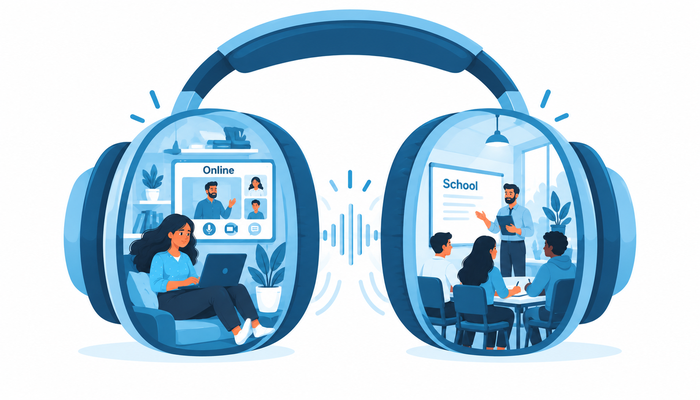
Online German Courses vs Language Schools: Which Is Better for Learning German?
When I first started comparing ways to learn German, I assumed the decision would be simple. Online German courses were flexible and convenient, while language schools offered serious classroom instruction. Choose convenience or choose quality. That was the picture I had in my head.
The reality is much more complicated.
A well-designed online German course can provide structured lessons, live teachers, feedback, conversation practice, and preparation from A1 through advanced levels. A language school can provide face-to-face interaction and accountability, but attending classes does not automatically guarantee faster progress. Your results depend on the course, teacher, schedule, practice outside class, and, most importantly, whether the learning format fits the way you actually live.
For people preparing to move to Germany, there is another consideration. You are not learning German simply to finish lessons. You may eventually need it to find housing, communicate at work, study, make appointments, understand letters, solve everyday problems, and build relationships.
So the useful question is not whether online courses or language schools are universally better.
The question is which option gives you the best chance of reaching usable German consistently.
Table of Contents
What Counts as an Online German Course?
What Is Different About a Language School?
Online German Courses: Main Advantages
Online German Courses: Main Disadvantages
Language Schools: Main Advantages
Language Schools: Main Disadvantages
Which Option Is Better for Speaking?
Which Option Is Better for Grammar?
Which Option Is Better for Busy Learners?
Which Option Is Better Before Moving to Germany?
Cost and Value
A Hybrid Approach
Common Mistakes
Lessons Learned
What Nobody Tells You
Decision Checklist
Conclusion
FAQ
What Counts as an Online German Course?
“Online German course” can describe several completely different learning experiences.
One course might consist entirely of prerecorded lessons and automated exercises. Another might include live group classes with a teacher several times per week. Some programs offer individual lessons. Others combine independent digital exercises with scheduled teacher sessions.
This distinction matters because many comparisons between online learning and classroom learning are too broad.
Before comparing an online course with a language school, look at what the course actually provides.
Does a teacher teach live?
How often do you speak?
Do you receive corrections?
Is there a structured curriculum?
Can you ask questions?
Are assignments reviewed?
Does the course follow CEFR levels?
The answers matter much more than the word “online.”
What Is Different About a Language School?
A traditional language school creates a physical learning environment.
You travel to a classroom at a scheduled time, meet a teacher and other students, and participate in lessons together. Depending on the school, classes may run once or twice per week or follow an intensive schedule with lessons on most weekdays.
The biggest difference is not simply that everybody is in the same room.
It is the environment that develops around the lesson.
You hear classmates asking questions you might not have considered. You participate in spontaneous exercises. You speak when the teacher unexpectedly calls on you. You negotiate meaning when your partner does not understand what you said.
Those moments create a type of pressure that independent online learning may not reproduce naturally.
For some students, that pressure is extremely valuable.
For others, commuting and fixed schedules make consistent attendance much harder.
Online German Courses: Main Advantages
Flexibility is the obvious advantage.
If you work full time, attend university, care for children, or live far from a reputable German school, online learning can remove a major logistical barrier.
A lesson beginning at 7:00 p.m. can mean opening your laptop at 6:58 instead of leaving home an hour earlier.
That difference sounds small until you repeat it several times every week.
Online learning can also expand your choice of teachers and courses. You are no longer limited to schools within commuting distance. A learner living in a city with few German programs can still access structured instruction.
Another advantage is continuity.
Imagine that you begin German in your home country and plan to relocate several months later. An online program may allow you to continue studying during travel, application preparation, or even after arriving in Germany.
Online learning can also make repetition easier. Digital exercises, saved materials, vocabulary systems, and recorded content can be revisited whenever necessary.
For disciplined learners, these advantages can create an efficient learning system.
But flexibility only helps when you use it.
Online German Courses: Main Disadvantages
The greatest strength of online learning can become its greatest weakness.
When your schedule is flexible, postponing study is easy.
You tell yourself you will complete the lesson tonight. Then tomorrow. Then during the weekend. Suddenly two weeks have passed.
Self-directed online programs require significantly more personal accountability than physically attending a class at a fixed time.
Speaking is another potential weakness.
A live online group course can include substantial speaking practice, but a self-paced platform may provide little genuine interaction. Completing pronunciation exercises is not the same as responding to another person who says something unexpected.
Technical fatigue matters too.
Many people already spend their workday looking at screens. Adding another long period of digital study can reduce concentration.
Finally, online students can become good at controlled exercises while remaining uncomfortable during unpredictable conversations.
If you choose online learning, deliberately create opportunities to speak.
Do not assume they will appear automatically.
Language Schools: Main Advantages
Language schools provide external structure.
Your class happens whether you feel motivated or not.
That sounds restrictive, but it can be incredibly helpful. Motivation changes constantly. A schedule does not.
Classroom learning also creates repeated social interaction.
You speak to teachers and classmates, listen to different voices, make mistakes publicly, and learn to continue communicating despite those mistakes.
That experience can gradually reduce speaking anxiety.
A physical classroom also makes it easier for a teacher to notice confusion immediately. Facial expressions, hesitation, and classroom interaction can reveal problems that are less obvious in independent digital study.
There is also a social advantage.
Learning German for relocation can become lonely, particularly when friends and family do not share the same goal. Meeting other learners can create a sense of progress and accountability.
You realize that other people also forget articles, confuse cases, struggle with listening, and occasionally freeze during speaking activities.
That can make the learning process feel more sustainable.
Language Schools: Main Disadvantages
The first disadvantage is logistical.
A ninety-minute class may require considerably more than ninety minutes of your day once commuting and preparation are included.
Fixed schedules can also conflict with work, university, or family responsibilities.
Missing a classroom lesson may mean missing material that continues the following week.
Another issue is pace.
Group classes have to serve multiple learners simultaneously. If you understand a topic quickly, you may spend time waiting while others catch up. If you need more explanation, the class may continue before you feel ready.
Class size matters as well.
A classroom containing many students may provide less individual speaking time than a small live online group.
This is why “in person” should never automatically be interpreted as “better.”
Evaluate the actual school.
Ask about class size, curriculum, teacher qualifications, speaking opportunities, homework, feedback, level placement, and progression.
A poor classroom course does not become effective simply because the teacher is physically present.
Which Option Is Better for Speaking?
If speaking is your biggest weakness, focus on interaction rather than location.
A small online class where you speak repeatedly may be better than a large physical class where you say three sentences during an entire lesson.
Likewise, a strong language school with pair work, discussions, role-play, and active teacher feedback may offer much richer speaking practice than a self-paced online program.
Ask one practical question:
How many minutes will I actually spend producing German?
Then look at the type of speaking.
Prepared presentations are useful, but spontaneous interaction is equally important.
For relocation, practice situations where you cannot predict every response. Ask questions. Clarify misunderstandings. Explain problems. Respond to follow-up questions.
The ability to recover when communication becomes difficult is one of the most useful skills you can develop before moving.
Which Option Is Better for Grammar?
Neither format automatically wins.
German grammar can be taught effectively online or in person.
What matters is whether you receive clear explanations, enough examples, meaningful practice, and correction.
Online learning can be particularly useful for repetition. If you repeatedly confuse adjective endings or word order, digital exercises allow concentrated practice.
A teacher becomes especially valuable when you understand a rule theoretically but continue applying it incorrectly.
Instead of studying the same explanation repeatedly, someone can identify what is actually going wrong.
For example, your problem may not be understanding the accusative case. You may simply not recognize quickly enough which verb or preposition triggers it while speaking.
Good instruction identifies the underlying problem.
Choose the format that gives you both explanation and application.
Which Option Is Better for Busy Learners?
Online courses usually have an advantage when scheduling is the main constraint.
But be careful.
Someone with a busy schedule may choose a self-paced course because it appears convenient, then discover that German is always pushed behind more urgent responsibilities.
In that situation, a fixed class can actually work better.
The commitment forces you to reserve time.
If your schedule changes unpredictably, however, rigid attendance requirements may become frustrating.
Think about your behavior rather than your ideal version of yourself.
Do deadlines help you?
Do you complete independent courses?
Do you need a teacher waiting for you?
Can you reliably protect three study periods every week?
Your past behavior provides useful evidence.
Choose a system that works with your habits instead of assuming motivation will completely change them.
Which Option Is Better Before Moving to Germany?
Before relocation, your priority should be building practical independence.
That means learning more than grammar.
You need listening, speaking, reading, vocabulary, and the confidence to communicate when your German is imperfect.
An online course can work extremely well if you supplement it with conversation practice and authentic listening.
A language school can work extremely well if you continue practicing outside class instead of treating attendance as your entire study plan.
Think about situations you may encounter after arrival.
Introducing yourself is useful, but so is explaining that something in your apartment is broken.
Ordering coffee is useful, but understanding an appointment confirmation matters too.
Practice housing, transportation, shopping, work, health appointments, phone calls, bureaucracy, and everyday social interactions.
Your course should support your relocation goals rather than existing separately from them.
Cost and Value
Online learning is often associated with lower prices, but cost comparisons require context.
A self-paced subscription may be inexpensive because teacher involvement is limited. A premium live online course can cost substantially more. Private online instruction may cost more per hour than a group language school.
Physical schools also vary enormously.
Instead of comparing prices alone, calculate value.
How many teaching hours are included?
How large is the class?
Do you receive individual feedback?
Are materials included?
Can you repeat lessons?
Is speaking practice substantial?
Does the course help you prepare for a required examination?
Most importantly, will you actually use what you purchase?
A cheap course abandoned after three weeks is not necessarily better value than a more expensive course you complete consistently.
A Hybrid Approach Can Be Better Than Choosing One Side
You do not necessarily need to choose online or classroom learning permanently.
A hybrid strategy can combine their strongest features.
You might attend a structured language school twice per week while using online exercises for grammar and vocabulary.
You might complete an online course while meeting a conversation tutor weekly.
You could begin with classroom instruction at A1, switch to online learning during a busy period, then join an intensive course before an examination.
Your learning method can change as your needs change.
At beginner levels, you may value structured explanations.
Later, speaking and listening may become your biggest weaknesses.
Before an exam, task-specific preparation may become the priority.
After relocating, authentic everyday interaction may provide practice that no course can fully reproduce.
Treat resources as tools rather than identities.
You are not an “online learner” or a “classroom learner.”
You are someone trying to build usable German.
Common Mistakes
The first mistake is choosing entirely by price.
The cheapest option is not valuable if you never use it.
The second is choosing based on prestige without examining the actual course format.
Another mistake is assuming classroom attendance automatically produces speaking ability.
You can attend hundreds of lessons while avoiding difficult conversations.
Online learners often make the opposite mistake. They complete exercises constantly but postpone speaking until they feel ready.
That moment may never arrive.
Another common mistake is switching resources too frequently.
Every new course feels exciting because the early material is organized and unfamiliar. Constant switching can create the illusion of progress while preventing sustained development.
Finally, learners sometimes chase the fastest advertised option.
Language learning involves accumulation, repetition, retrieval, correction, and exposure.
No format eliminates that work.
Lessons Learned From Comparing Both Options
The most important lesson is that consistency beats theoretical efficiency.
A course can have exceptional teachers and materials, but those advantages mean little if the schedule makes regular attendance impossible.
The second lesson is that speaking must be deliberately protected.
Whether you study online or in person, make sure you are producing German rather than only recognizing it.
Third, feedback becomes increasingly valuable as your German develops.
Beginners often notice obvious mistakes. At intermediate levels, recurring problems can become habits because you can communicate successfully despite them.
Finally, the best format can change.
What works at A1 may not be what you need at B2.
Reevaluate your system when progress slows.
What Nobody Tells You About the Choice
People often compare learning formats as though one decision determines the entire outcome.
It does not.
What happens between lessons can matter more than where the lesson takes place.
A student attending an excellent language school but never reviewing vocabulary, listening to German, or speaking outside class may progress slowly.
An online learner who studies consistently, attends live sessions, reviews mistakes, listens daily, and speaks several times each week may progress quickly.
There is another issue for future expats.
The German you need after moving may not perfectly match the German emphasized in your course.
Real conversations include interruptions, accents, incomplete sentences, unfamiliar vocabulary, and cultural assumptions.
A person who has already relocated can help explain where classroom German matched reality and where it did not. That lived experience can help you identify practical gaps, although formal language and immigration requirements should always be checked with the relevant official institution.
Decision Checklist
Choose an online German course if flexibility is essential, commuting is difficult, local course options are limited, and you can study independently.
Choose a language school if fixed schedules improve your consistency, face-to-face interaction motivates you, and you benefit from a physical learning environment.
Before paying, check the curriculum, CEFR level, class size, teacher involvement, speaking opportunities, correction process, schedule, cancellation rules, and total learning hours.
Then ask yourself one final question:
Which option am I realistically going to continue using six months from now?
That answer may be more important than any feature comparison.
Conclusion
Online German courses and language schools can both produce strong results.
Online learning offers flexibility, accessibility, and the ability to combine structured lessons with digital practice from almost anywhere. Language schools provide physical structure, direct social interaction, spontaneous communication, and external accountability.
Neither format solves every problem.
If you choose online learning, protect speaking practice and create a consistent schedule.
If you choose a language school, practice beyond classroom hours and make sure you are actively using German rather than simply attending lessons.
If both options fit your situation, consider combining them.
Your goal is not to choose the learning format that sounds most impressive.
Your goal is to create a system you can sustain long enough to reach the German level required for the life you are planning.
FAQ
Are online German courses as effective as language schools?
They can be. Effectiveness depends on course quality, teacher involvement, speaking opportunities, feedback, and your consistency. A structured live online course can provide many elements of classroom instruction, while a self-paced course requires more independent discipline.
Is a language school better for learning to speak German?
Not automatically. A small interactive class can provide excellent speaking practice, but large classes may limit individual speaking time. Compare the amount and quality of interaction rather than assuming face-to-face learning guarantees better speaking.
Can I reach B2 German through online courses?
Yes, learners can develop advanced German through online study when the program provides appropriate progression and they practice all major skills. Formal certification, when required, should be handled according to the relevant examination rules.
Should I study German online before moving to Germany?
Starting before relocation can make everyday situations after arrival easier. Online learning is particularly useful when you do not have access to a suitable local school. Combine structured lessons with listening and regular speaking practice.
Is it better to wait and learn German after moving to Germany?
Usually there is little advantage in deliberately waiting if you already have time to begin. Living in Germany can create more exposure, but exposure does not automatically become learning. Building a foundation before moving can make later immersion more useful.
What should I check before choosing a German course?
Check the CEFR level, curriculum, class size, schedule, teacher involvement, speaking practice, feedback, learning materials, total instructional time, and whether the format matches your goal. If you need German for university, employment, a visa process, or another formal purpose, verify the required language evidence separately.
What is the best choice for someone preparing to relocate?
Choose the format you can maintain consistently while developing practical communication. For some people that means a physical language school. For others it means live online classes combined with independent study and conversation practice. The strongest choice is the one that turns German into a regular part of your week and prepares you to use it beyond the classroom.