Why I Changed My Immigration Path Midway
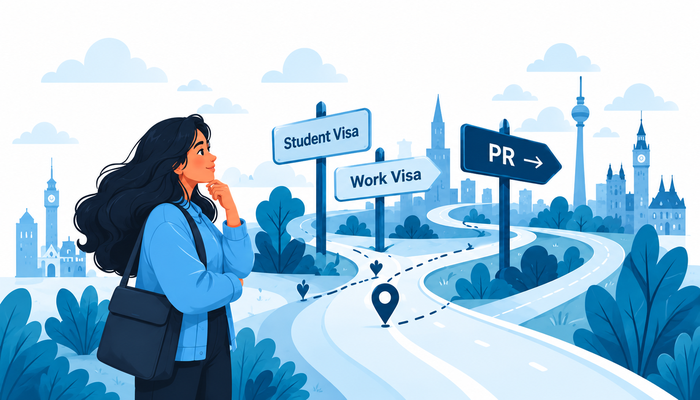
Why I Changed My Immigration Path Midway and What I Learned
I did not change my immigration path because the original plan was completely wrong. I changed it because the information I had at the beginning was no longer the information I had later.
When I first started planning, the route looked logical. It matched what I knew about my profile, finances, career, and destination at the time. I had already invested months into research, documents, language preparation, and budgeting, so changing direction felt uncomfortable. Part of me wanted to continue simply because I had already come so far.
What eventually changed my mind was realizing that persistence and stubbornness are not the same thing. A migration strategy should survive because it still makes sense, not because you have already spent time and money on it. Once the evidence changed, I had to decide whether I wanted to protect the old plan or protect the long-term goal.
I chose the goal.
My Original Plan Made Sense at the Beginning
The first route was not random. I had chosen it because it appeared to fit my circumstances reasonably well. I understood the basic requirements, believed the financial commitment was manageable, and could see a path from application to relocation.
The problem was that I had treated the plan as more permanent than it really was. I assumed that once I had selected a route, my job was simply to complete the checklist. I did not expect the strategy itself to need another serious review.
As the months passed, new information began to appear. Some requirements were more demanding than expected. The career outcome looked less attractive once I spoke with people already in the country. Costs increased, and the timeline became longer. None of these issues alone destroyed the route, but together they changed the calculation.
That was the first lesson: a migration plan should be reviewed when the facts change, even if the original decision was sensible.
I Realized I Was Protecting the Time I Had Already Spent
The hardest part of changing direction was emotional rather than administrative.
I had already invested significant time preparing for the first route. Documents had been collected, research had been done, and I had explained the plan to people around me. Walking away from part of that work felt like wasting it.
This is where sunk-cost thinking becomes dangerous. Past effort cannot make a weak future decision stronger. The time and money were already spent whether I continued or changed direction.
The better question was whether I would still choose the same route if I were making the decision for the first time today. Once I asked myself that honestly, the answer was no.
That gave me permission to reconsider everything.
The Career Outcome Became More Important Than the Visa
At the beginning, I was focused heavily on entry. I wanted to know how I could legally move, how difficult approval would be, and how long the process might take.
Later, I started thinking more seriously about what happened after arrival.
Would the route improve my career? Would I be able to earn enough? Would I gain meaningful experience, or would I spend years simply maintaining legal status? Would the route make me more independent over time or more dependent on one employer, institution, or business?
Those questions changed the way I evaluated the plan. A visa is only useful if the life built around it is sustainable.
I realized that I had been optimizing for crossing the border rather than for the five years that would follow.
My Financial Assumptions Changed
Another reason I changed direction was that the original financial plan no longer looked as comfortable as it once had.
At first, I had calculated application fees, moving expenses, and a basic living reserve. Over time, I understood that the real cost included much more: months without income, housing deposits, insurance, document expenses, unexpected delays, and the possibility that a spouse or second income would take longer to restart.
The route was still technically affordable, but the margin for error had become too small.
That distinction mattered. Being able to pay for a migration plan is not the same as being financially secure while following it.
I wanted enough flexibility to survive delays without turning every problem into a financial emergency. The alternative route required different preparation, but it gave me a more sustainable financial structure.
Practical Example: From Study to Employment
Imagine someone with seven years of professional experience who initially chooses a master's degree abroad. The route seems clear: gain admission, study for two years, then enter the local labour market.
During preparation, however, they begin speaking with employers and discover that their existing experience is already competitive. At the same time, the full cost of tuition, living expenses, and two years of lost income becomes much larger than expected.
Continuing with the degree would still be possible, but the person now has a different question. Is the education genuinely necessary, or is it simply the migration route they chose first?
If direct employment becomes realistic, changing strategy may preserve both money and career momentum.
The degree was not a bad plan. It simply became less attractive once better evidence appeared.
I Started Listening to Patterns Instead of Isolated Opinions
Another change came from how I collected information.
At first, I was influenced by individual success stories. Someone had moved through a particular route and recommended it strongly. Another person said the process was straightforward. Those stories were useful, but I gave them too much weight.
Later, I started looking for patterns. What did several people with profiles similar to mine experience? What problems repeated across different cases? Which obstacles appeared consistently?
This produced a more realistic picture.
One person's experience can show what is possible. A pattern helps show what is probable.
That distinction became especially important when deciding whether the original route still made sense.
I Changed the Strategy Before I Changed the Goal
Changing immigration path did not mean abandoning the destination or the long-term objective.
This was an important distinction.
My original goal was still valid. I still wanted the same type of career, stability, and international life. What changed was the method for getting there.
Once I understood that, the decision felt much less dramatic.
Migration routes are tools. They are not identities.
If another tool serves the goal better, changing it is not failure. It is strategy.
Not Everything From the Original Plan Was Wasted
One fear I had was that changing route would force me to start from zero.
It did not.
Language preparation remained useful. Financial savings still mattered. Documents could often be reused. Research about the destination was still valuable. Professional development strengthened the new route as much as the old one.
Even the parts that could not be transferred had taught me what to avoid.
This is why changing strategy midway does not necessarily mean losing all previous progress. Good preparation often builds assets that support several routes.
The important thing is to identify what can be carried forward.
I Built the Second Plan Differently
The second strategy was more structured because I had learned what was missing from the first one.
Instead of asking only whether I qualified, I asked whether I was competitive. Instead of calculating only the minimum required money, I calculated how long I could realistically survive if things moved slowly.
I also created a backup route from the beginning and defined review points. If the new strategy failed to produce enough progress by a certain date, I already knew what I would reassess.
That made the plan more flexible without making it vague.
The goal was no longer to create a perfect strategy. It was to create one that could adapt before problems became expensive.
I Learned Not to Confuse Delay With Failure
One of the reasons people remain on the wrong route is fear of losing time.
Changing strategy can delay migration by several months. That delay can feel enormous when you are eager to move.
But moving earlier through a weak route can cost much more time later.
An unnecessary degree, an unstable job, or a business with poor market fit can create years of correction. Spending six extra months building a stronger route may ultimately make the entire journey shorter.
I stopped judging progress only by the departure date.
The quality of the landing mattered more.
Family Considerations Changed the Decision Too
My original plan was focused mainly on the main applicant. Once I started thinking about the household more seriously, some weaknesses became obvious.
Would a spouse be able to work quickly? Could the family handle a long period with reduced income? Were the children's education and housing needs compatible with the original timeline?
A route can be technically excellent for one person and still create unnecessary pressure for everyone else.
The revised strategy was slower in some ways, but it created more financial and practical stability for the family.
That made it stronger overall.
The Hardest Part Was Admitting the Original Plan No Longer Fit
Changing strategy was not difficult because I lacked alternatives. It was difficult because I had to admit that a plan I had defended for months was no longer the best one.
That is uncomfortable.
People often connect consistency with competence. We want to believe that good decisions should remain good decisions.
But good planning includes changing your mind when the evidence changes.
The mistake would have been continuing simply to avoid admitting that the original assumptions were outdated.
What Nobody Told Me About Changing Immigration Paths
The most surprising part was how much relief I felt once the decision was made.
Before changing, I spent months trying to force the original plan to work. Every new problem felt like something I had to solve without questioning the route itself.
Once I allowed myself to reconsider the strategy, the problem became easier to analyze.
I could compare alternatives honestly.
I realized that flexibility is not a sign that the immigration plan is weak. In many cases, flexibility is what prevents a weak plan from becoming an expensive one.
What I Would Do Differently Now
If I were starting again, I would build review points into the migration plan from the beginning. I would decide when to reassess the route, which signals would justify a change, and how much money or time I was willing to commit before reconsidering.
I would also compare the three-to-five-year outcome earlier instead of focusing so heavily on approval. Career development, family stability, income, independence, and long-term residence would have much more weight in the initial decision.
Most importantly, I would treat changing direction as a normal part of migration planning rather than something to avoid.
Conclusion: Changing the Route Protected the Goal
I changed my immigration path midway because the original route stopped being the strongest way to reach the life I wanted.
The costs had changed, the career outcome looked different, and I had better information than I did when the first decision was made. Continuing would have protected the old plan, but changing direction protected the long-term objective.
That experience taught me to ask one question whenever a migration strategy begins to feel increasingly difficult:
“If I knew everything I know today, would I still choose this route?”
If the answer is yes, continuing may be the right decision.
If the answer is no, changing direction is not failure. It may be the most rational part of the entire plan.
FAQ
Why do people change immigration routes midway?
Common reasons include changing career opportunities, higher-than-expected costs, new family circumstances, legal changes, weak job-market results, or discovering that another route fits the profile better.
Does changing migration strategy mean the original plan failed?
Not necessarily. The original plan may have been reasonable based on the information available at the time, while new information makes another strategy stronger.
How do I know when to change routes?
Review the route when the same obstacles continue appearing, costs or timelines change significantly, or another pathway now produces a better long-term outcome.
Is previous preparation wasted if I change routes?
Often not. Language skills, documents, savings, market research, and professional development can remain valuable under a different pathway.
Should I change routes after a few setbacks?
Not automatically. Look for repeated patterns and meaningful evidence rather than reacting to one rejection or delay.
Is it better to delay migration for a stronger route?
Sometimes. A short delay spent improving language, finances, employability, or documentation can reduce much larger risks after arrival.
What is the most important question before changing strategy?
Ask whether you would still select the same route today if you were making the decision from the beginning with your current information.