Fast Migration Routes vs Low-Risk Routes
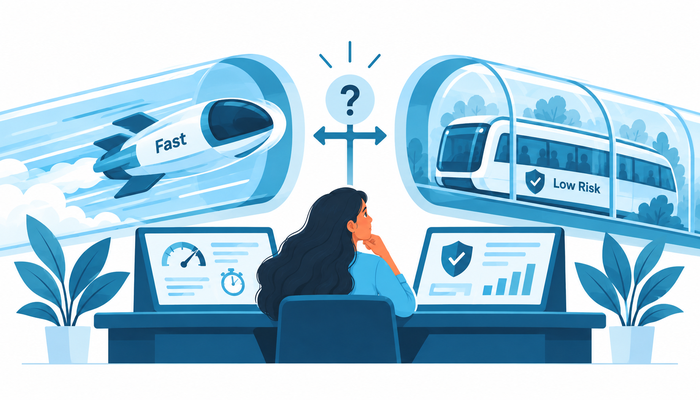
Fast Migration Routes vs Low-Risk Routes: Which Strategy Fits Your Profile?
When people compare immigration options, speed is often one of the first things they look at. A route that can get you abroad in a few months naturally feels more attractive than one that requires a year of preparation, language study, qualification recognition, or a longer job search. The problem is that the fastest route is not always the safest one, and the lowest-risk route is not always the slowest.
Speed tells you how quickly you may be able to enter a country. Risk tells you what happens if the plan does not unfold as expected after arrival. Those are different questions.
A fast route may depend heavily on one employer, one university admission, one business, or a large amount of personal savings. A slower route may require more preparation but give you stronger employment prospects, more financial stability, or better long-term options once you move.
The useful question is therefore not “Which route gets me there fastest?” It is “How much uncertainty am I willing to accept in exchange for moving sooner?”
A Fast Route Solves the Timing Problem First
Some migration strategies are designed around immediate opportunity. A person receives a qualifying job offer, university admission, or family-based right and can begin the process quickly. In those cases, speed can be a genuine advantage because the applicant is not spending years building a profile from zero.
The risk appears when speed becomes the main selection criterion. If someone chooses a route only because it is available now, they may overlook whether it fits their career, finances, or family. A quick admission to a weak academic program is still a weak educational decision. A fast job offer from an unstable employer can still create employment risk. A business route that is easy to start can still consume savings if the market is unproven.
Speed is useful when the underlying route already makes sense. It becomes dangerous when it replaces proper evaluation.
Low Risk Usually Means More Than a High Approval Chance
People sometimes define a low-risk migration route as one that seems likely to be approved. That is too narrow.
Approval risk is only one part of the picture. You also need to consider financial risk, employment risk, family risk, and the risk of becoming trapped in a route that does not create better options later.
A route with a high approval probability can still be financially fragile. A student may be almost certain to obtain admission but still face years of tuition and uncertain employment after graduation. A founder may satisfy immigration requirements but still have no evidence that the business will generate enough revenue.
A lower-risk strategy is one that remains manageable even if something goes wrong.
Employment Can Be Fast and Relatively Stable When the Job Is Strong
Direct employment can combine speed and stability when the applicant already has a strong professional profile and a reliable employer.
If the job offer is genuine, the company is established, the salary supports the household, and the profession has broader demand in the country, employment can create a relatively predictable transition. The applicant moves with income already connected to the plan rather than depending entirely on savings.
The risk comes from employer dependency. If the residence status is closely tied to the job, losing that job can create both financial and immigration pressure at the same time.
That means employment is lower risk when the applicant also has alternatives. A strong profession, several potential employers, transferable skills, and enough emergency savings all reduce the danger of depending on one company.
Study Can Be Faster to Access but More Expensive to Carry
Education is often considered an accessible migration route because university admission can feel more predictable than international hiring. For younger applicants or people changing careers, that can be strategically useful.
But the financial structure is less secure. Students usually begin by spending rather than earning, and the real cost may include tuition, living expenses, insurance, and lost full-time income. If the degree does not significantly improve employability, the route can become expensive without reducing long-term uncertainty.
Study becomes lower risk when the program is affordable, directly connected to a strong labour market, and the applicant has enough savings to finish without relying on unrealistic income assumptions.
A fast university admission does not automatically create a low-risk migration strategy.
Job-Search Routes Can Be Fast to Enter and Risky to Finance
Some immigration systems allow applicants to enter specifically to search for work. These routes can remove one major barrier because the applicant does not always need to secure a long-term job before arrival.
The trade-off is financial uncertainty.
You may be living in the destination while spending savings and competing for employment. That creates a countdown. The longer the job search lasts, the more pressure builds.
For someone with an in-demand profession, strong language skills, and several months of accessible savings, that risk may be manageable. For someone with weak market fit and limited runway, the same route can become stressful very quickly.
The route itself is not inherently high or low risk. The profile using it determines much of the risk.
Family-Based Migration Can Be Fast but Create Dependency
Family reunification may offer a relatively direct route when a qualifying relationship already exists.
It can also reduce the need to prove an independent employment or education reason for entry.
But the risk profile depends on how much the arriving family member's residence and finances depend on the sponsor. If the spouse can work freely and build an independent career, that dependency may reduce over time. If the household relies entirely on one person's income and legal status, the route can feel much more fragile.
This is why family routes should be evaluated as household strategies rather than simply fast ways to obtain residence.
The key question is how quickly the arriving partner can build their own financial and professional independence.
Entrepreneurship Can Be Fast to Start and Slow to Stabilize
Business routes can appear attractive because the founder controls the project instead of waiting for an employer.
That sense of control can be misleading.
A company may be registered quickly while revenue takes a year or more to become predictable. The founder may also be managing immigration, business development, banking, taxes, and relocation at the same time.
Entrepreneurship therefore creates a different form of risk. Instead of employer dependency, the founder depends on the business actually working.
A lower-risk entrepreneur route requires genuine market evidence, enough business capital, separate personal reserves, and a clear plan for what happens if revenue develops more slowly than expected.
Practical Example: Amir Has a Fast Option and a Safer Option
Imagine Amir is a 32-year-old engineer with seven years of experience. He has two possible strategies.
The first is a master's program that can begin within a few months. Admission looks realistic, and the immigration process is relatively clear. The route is fast, but Amir would need to stop full-time work and use a large part of his savings over two years.
The second option is direct employment. It may take longer because he needs stronger language skills and a more targeted job search, but if successful he would relocate with a salary and continue building professional experience.
The study route is faster to access. The employment route may be financially lower risk.
That does not automatically mean Amir should choose employment. If the degree genuinely changes his career, study could still make sense. The point is that speed and risk should be evaluated separately.
Financial Runway Is One of the Best Measures of Risk
One of the clearest ways to compare routes is to calculate how long you can survive without the expected outcome.
If you move for employment, what happens if the job ends after three months? If you move to search for work, how many months can you continue without income? If you study, can you complete the program even if part-time work is difficult to find? If you start a business, how long can both the company and household survive before revenue stabilizes?
The more time you have to recover from a setback, the lower the practical risk becomes.
This is why liquidity matters so much. A person with enough accessible savings can manage uncertainty that would be dangerous for someone whose entire budget depends on everything happening exactly on schedule.
Speed Can Hide Opportunity Cost
A fast route can feel valuable because it prevents another year of waiting. But moving sooner can also create costs.
You may enter through a weaker degree instead of waiting for a better program. You may accept a low-quality job because it is the first employer willing to hire internationally. You may choose a country with an easier entry route even though your profession has better long-term prospects elsewhere.
These decisions are not necessarily wrong. Sometimes speed itself has value.
The important thing is to calculate what you are giving up in exchange for it.
A fast move should solve more problems than it creates.
Slower Preparation Can Reduce Risk Before Arrival
Some of the safest migration work happens before the application.
Improving language skills, getting qualifications recognized, saving more money, building work experience, or validating a business can delay the move while making the eventual transition much stronger.
This can feel frustrating because nothing visible is happening yet.
In reality, you are moving risk from the expensive post-arrival stage into the cheaper preparation stage.
Six additional months of language learning at home may be much easier than six months of unemployment abroad. A year of relevant experience may strengthen the job search more than a rushed application to another degree.
Slow preparation is not always delay. Sometimes it is risk reduction.
Family Migration Requires a Different Definition of “Fast”
For a solo applicant, moving three months earlier may be an obvious advantage. For a family, the calculation is more complicated.
A fast route may force children to change schools mid-year, leave the spouse without a career plan, or require the household to survive on one uncertain income. A slightly slower route may allow the family to save more money, align with the school calendar, or move after the spouse has secured better work options.
That can make the slower route operationally safer even if the immigration paperwork takes longer.
Families should optimize for a stable landing, not simply the earliest departure date.
Lower Risk Does Not Mean No Risk
No migration route is risk-free.
Employment can fail. Study can disappoint. Businesses can lose money. Relationships can change. Immigration rules can be updated.
The goal is therefore not to eliminate uncertainty.
It is to avoid situations where one ordinary setback destroys the entire plan.
A lower-risk route usually has more buffers: money, alternative employers, transferable skills, family income, route-change options, or enough time to recover.
Resilience matters more than certainty.
What Nobody Tells You About Fast Migration
Moving quickly can create emotional pressure to justify the decision.
Once you have spent money, left a job, and told everyone you are moving, changing direction becomes harder. That can make people tolerate weak jobs, expensive degrees, or failing businesses longer than they should.
Speed compresses decisions.
The less time you spend preparing, the more you need to learn after arrival, when mistakes are usually more expensive.
A fast route works best when the applicant is already well prepared rather than using speed to avoid preparation.
How to Compare Speed and Risk Properly
Start by estimating the earliest realistic arrival date for each route. Then ignore that date temporarily and compare what happens after arrival.
How soon does reliable income begin? How much capital remains? How dependent are you on one employer, person, or business? What happens if the first plan fails? Can you change status or career direction? How does the route affect your family?
Then return to speed.
If two routes have similar long-term risk, the faster one may have a meaningful advantage. If the faster route creates much greater financial or professional vulnerability, the extra months saved may not be worth it.
Conclusion: The Fastest Route Is Valuable Only If You Can Sustain It
Fast migration and low-risk migration are not opposites. Some applicants can find routes that offer both. Others need to choose which factor matters more.
The key is to stop measuring success by the date you leave.
A migration strategy should be judged by how stable the first years become after arrival. The strongest route is one where you can absorb delays, protect your finances, continue developing your career, and change direction if the original plan stops working.
Instead of asking “How quickly can I move?”, ask:
“If I move through this route as fast as possible, how much room will I still have if something goes wrong?”
That question makes speed much easier to evaluate.
FAQ
What is a fast migration route?
A fast route is one that can potentially move from eligibility to relocation relatively quickly, often because the applicant already has a job offer, admission, family basis, or another clear legal pathway.
What makes a migration route low risk?
Lower-risk routes generally have stronger financial buffers, reliable income, transferable skills, realistic backup options, and less dependence on one fragile assumption.
Is a student route considered low risk?
Not automatically. Admission can be predictable, but the route may require significant savings and still depend on successful employment after graduation.
Is employment usually safer than study?
It can be financially safer when the job is stable and the applicant has broader labour-market options, but heavy dependence on one employer can still create risk.
Can a slower migration route be better?
Yes. Additional preparation time can improve language, savings, qualifications, or employability and make the eventual move much more resilient.
How should families compare fast and slow routes?
They should consider school timing, spouse career options, housing, household income, and how much financial reserve remains after relocation.
What is the biggest mistake when choosing a fast route?
A major mistake is prioritizing the earliest possible move without checking whether the route remains financially, professionally, and legally sustainable after arrival.