Understanding Immigration Costs, Risks, and Timelines
Understanding Immigration Costs, Risks, and Timelines Before You Move
Immigration plans often look much simpler at the beginning than they do in reality. You identify a visa, estimate the official application fee, look at the expected processing time, and assume that the rest can be managed once the application is submitted.
That is where many plans become unrealistic.
The true cost of migration is rarely just the visa fee. The real timeline usually starts long before submission and continues well after approval. The biggest risks are often not dramatic legal problems but practical issues such as delayed employment, higher living costs, document problems, qualification recognition, family adjustment, or running out of money before the new life becomes stable.
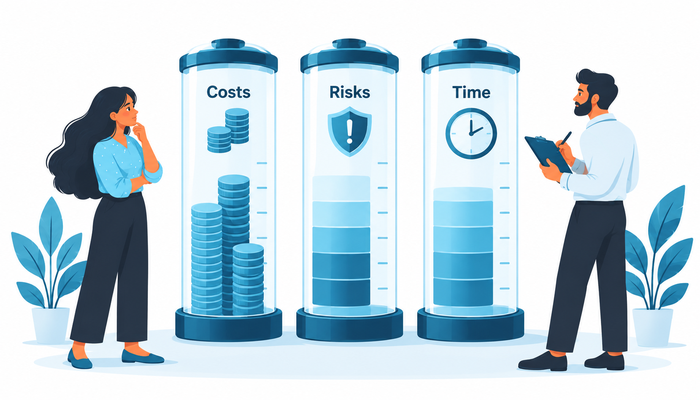
A strong immigration plan therefore needs three separate calculations: how much the move will really cost, what can realistically go wrong, and how long the entire transition may take from preparation to stability.
The Official Visa Fee Is Only a Small Part of the Cost
When people compare immigration routes, they often begin with the most visible number: the application fee. That number matters, but it can represent only a small percentage of the actual financial commitment.
Depending on the route, you may also need language tests, document translations, legalization, qualification assessments, university applications, insurance, professional advice, travel, housing deposits, temporary accommodation, and local registration after arrival. Study routes can add tuition. Entrepreneur routes may require business capital. Job-search routes may require several months of living expenses before income begins.
The right way to calculate cost is therefore not to ask how much it costs to apply. Ask how much money is required from the beginning of preparation until the point where your income and life are reasonably stable.
That is a much larger number, but it is also a much more useful one.
Separate Immigration Costs From Relocation Costs
Immigration and relocation are connected, but they are not the same budget.
Immigration costs include the expenses needed to qualify, prepare, and obtain the legal status. Relocation costs begin when you actually move and need to establish a life in the destination.
This distinction matters because relocation costs often arrive in a short period. Deposits, first rent, temporary accommodation, furniture, transport, insurance, school expenses, and basic household purchases can consume significant cash during the first weeks.
If all of your savings are mentally assigned to “the visa,” you can arrive legally approved but financially unprepared.
A better plan uses separate categories for application costs, moving costs, living reserves, and emergencies.
Calculate Lost Income as a Real Cost
One of the most overlooked migration expenses is income you do not earn.
A student may leave full-time work to begin a degree. A professional may resign before relocating and spend several months searching for another job. A founder may use the first year to establish a company without taking a meaningful salary.
That lost income should be included in the financial comparison.
Suppose one route costs less in application fees but requires a year without stable employment. Another route costs more initially but allows immediate work. Looking only at official fees could make the first option appear cheaper even though its total financial cost is much higher.
Opportunity cost matters because migration decisions affect both what you spend and what you temporarily stop earning.
Build a Base Case and a Downside Case
Migration budgets become dangerous when they assume everything happens on schedule.
The base case might assume approval within the expected period, a job beginning two months after arrival, and housing close to the amount you researched.
The downside case should assume delays.
What happens if the application takes longer? What if you need temporary accommodation for six additional weeks? What if your first job search takes six months rather than two? What if a spouse cannot work immediately?
The goal is not to predict the worst possible outcome. It is to make sure the plan remains functional when several ordinary things take longer or cost more than expected.
A route that works only in the best-case scenario is not a strong migration plan.
Timelines Should Start Before the Application
People often think of immigration timing as the period between submission and approval.
That is too narrow.
The real timeline may begin with language preparation, qualification recognition, university applications, finding an employer, preparing a business plan, or gathering documents. Some of those steps can take longer than the visa itself.
For a work route, the biggest delay may be finding the job. For a study route, the application cycle may determine the calendar. For entrepreneurship, building enough evidence of a credible business may take months before the immigration application is even ready.
This is why you should map the entire sequence rather than searching only for “visa processing time.”
Document Preparation Can Quietly Delay Everything
Documents are one of the most common sources of avoidable delay.
Degrees, transcripts, employment records, birth certificates, marriage certificates, police records, bank evidence, and professional licences may need updated copies, certified translations, legalization, or another form of verification.
The problem is that these steps are often discovered too late.
A roadmap should divide documents into two groups. Stable documents can often be prepared early. Time-sensitive documents should be obtained closer to the application so they do not expire before they are used.
This simple distinction can save weeks or months.
Employment Routes Carry Job-Market Risk
A work-based route may look financially attractive because employment provides income soon after arrival. But the key risk is whether the job actually materializes and remains stable.
Applicants should distinguish between already having a signed offer and planning to find work after arrival. Those are very different risk profiles.
If the route depends on employment, consider the strength of your profession in the local market, language requirements, qualification recognition, and how many employers realistically hire international candidates.
Also ask what happens if the first job ends. The immigration consequences vary by country and permit, but the strategic question is universal: how dependent is your residence on one employer?
A good plan includes both the entry job and the backup employment strategy.
Study Routes Carry Career and Timing Risk
Education can be a strong migration bridge, but its risks are different.
The largest cost may not be tuition. It may be the combination of tuition, living expenses, and reduced earnings during the program.
The second risk is assuming that the degree automatically produces employment afterward. It may improve your profile, but job outcomes depend on the field, local language, professional demand, and the quality of the program.
Study timelines are also less flexible than they appear. Admission cycles, semester dates, visa processing, housing, and graduation schedules can determine several years of your plan.
Before choosing a study route, calculate not only whether you can afford to begin, but whether the degree still makes sense if employment takes longer than expected after graduation.
Entrepreneur Routes Combine Business and Immigration Risk
Entrepreneurship can create flexibility and independence, but it introduces another layer of uncertainty because the business itself may support the migration strategy.
That means the founder has two problems to solve at once: the company must become commercially viable, and the immigration conditions must continue to be satisfied.
Business capital and personal living reserves should therefore be separated. If every business setback threatens rent or family expenses, the founder may make poor decisions under pressure.
The timeline should also be realistic. A company rarely becomes predictable immediately after registration. Customer acquisition, local trust, licensing, banking, and market adaptation can all take longer than expected.
A founder should plan for the period before meaningful revenue, not only the cost of creating the company.
Family Migration Has Hidden Financial and Time Costs
Families should calculate migration differently from solo applicants.
The main applicant's route may look manageable, while the household faces additional housing, school, childcare, healthcare, and transport costs. A spouse may also need time to restart a career.
That delay can affect the entire budget.
If the family expects two incomes but the second income takes a year to appear, the original plan may become much more fragile.
The timeline should also account for children. School calendars, language support, and the emotional cost of moving at the wrong time in an academic year can all influence when the family should relocate.
The fastest immigration timeline is not always the best family timeline.
Liquidity Matters More Than Total Wealth
Someone can be financially strong on paper and still be poorly prepared for migration.
The issue is liquidity.
Property, long-term investments, or business assets may represent significant wealth but may not be easily available for living costs, emergencies, or sudden changes.
During relocation, cash flexibility can be extremely valuable because unexpected costs often need to be paid immediately.
This does not mean keeping every asset in cash. It means protecting enough accessible money that you are not forced to sell investments or borrow under pressure if the timeline changes.
The more uncertain the route, the more valuable liquidity becomes.
Practical Example: The Route Looked Affordable Until the Timeline Changed
Imagine Maya plans to relocate through a work route. She has enough savings for four months and expects to begin employment shortly after arrival.
Her calculations look reasonable.
Then the job start date is delayed, temporary accommodation lasts longer than expected, and the apartment requires a larger deposit. None of these events is catastrophic, but together they consume most of her reserve before the first salary arrives.
The mistake was not choosing the work route. The mistake was building the budget around one expected timeline.
If Maya had planned for eight months instead of four, the same delays would have been inconvenient rather than threatening.
That difference is what risk planning is supposed to create.
Create Decision Points Before Problems Appear
A strong migration plan should contain financial and timing checkpoints.
For example, decide in advance what happens if the job search reaches Month Four without serious progress. Decide how much savings must remain untouched as an emergency reserve. Decide when a business should reduce costs if revenue is below plan.
These rules are much easier to create before stress begins.
Without them, people often continue spending because they expect the next month to improve. By the time they make a change, much of their flexibility has already disappeared.
Decision points turn uncertainty into a manageable process.
What Nobody Tells You About Immigration Timelines
The most frustrating part of migration is often that several timelines depend on each other.
You may need a document before you can submit an application, approval before you can book the move, housing before the family arrives, and local registration before another administrative process can begin.
A delay early in the chain can move everything after it.
That is why good immigration planning includes buffer time. Avoid arranging every major financial and personal commitment around the earliest possible approval date.
A little flexibility in the calendar can prevent a normal delay from becoming an expensive emergency.
Build a Three-Layer Financial Safety Plan
A useful migration budget has three layers.
The first is expected cost: everything you reasonably believe the process will require.
The second is contingency money for delays and underestimated expenses.
The third is an emergency reserve that is not part of the migration budget at all.
That final layer matters because unexpected events do not stop happening simply because you are relocating.
If every available euro is needed for the move to succeed, the plan has no resilience.
Conclusion: Plan for the Transition, Not Just the Application
Understanding immigration costs, risks, and timelines requires looking beyond the official visa process.
The real cost includes preparation, relocation, lost income, and the months before financial stability. The real risk includes employment uncertainty, business performance, family adjustment, document delays, and unexpected expenses. The real timeline begins before application and continues after arrival.
Instead of asking only “How much does this visa cost and how long does it take?”, ask:
“How much money, time, and flexibility will I need until this route becomes stable enough that one delay does not threaten the entire plan?”
That is a much stronger foundation for any immigration decision.
FAQ
What costs should I include in an immigration budget?
Include application fees, documents, translations, tests, travel, relocation, housing deposits, insurance, living expenses, professional fees, and any period of lost income.
Why should I create a downside budget?
A downside budget shows whether your plan can survive ordinary delays, higher living costs, or slower employment without creating a financial crisis.
When does an immigration timeline really begin?
It begins with the first required preparation, such as language learning, qualification recognition, job search, university applications, or document collection.
How much emergency money should I keep?
There is no universal amount, but the emergency reserve should be separate from the money already required to complete the migration plan.
What is the biggest financial risk in migration?
A major risk is underestimating how long it will take before stable income begins and using most available savings during the transition.
Why do families need a different migration budget?
Families may face higher housing, school, childcare, healthcare, and daily living costs, while a spouse's income may take time to restart.
What is the best way to manage migration uncertainty?
Use realistic timelines, maintain liquidity, build contingency funds, and create decision points before delays or financial pressure become serious.