Questions to Ask Before Selecting a Migration Route
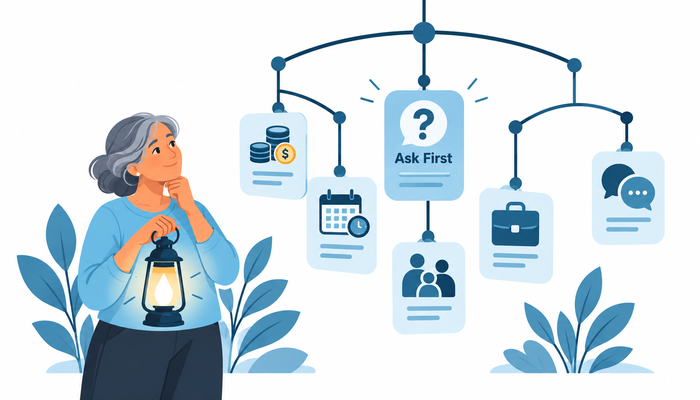
Questions to Ask Before Selecting a Migration Route
Choosing a migration route is often treated like a search for the easiest visa. People compare processing times, document lists, financial requirements, and approval conditions, then choose the route that looks most accessible.
That can be a costly mistake.
A route may be easy to enter and difficult to live with. It may allow you to move but limit your spouse's career, delay your own professional progress, consume more savings than expected, or create a long-term residence path that does not match your goals. Another route may look harder initially but fit your career and finances much better once you arrive.
Before choosing between work, study, family reunification, entrepreneurship, or investment-based migration, it helps to ask a series of questions that go beyond eligibility. The goal is not simply to find a legal way into a country. It is to choose a route that still makes sense after the visa has been approved.
What Is the Strongest Part of My Profile?
Start with what you already have.
Do you have a strong professional background, a degree, several years of relevant experience, language ability, family connections, an existing business, or substantial capital? The strongest immigration strategy usually builds on assets that already exist rather than requiring you to create an entirely new profile.
Someone with ten years of professional experience should think carefully before returning to university purely for migration purposes. A recent graduate with little work experience may have a very different calculation. A founder with real customers should not automatically abandon entrepreneurship to search for employment, while someone with no business experience should not create a company simply because an entrepreneur route exists.
Ask which route allows you to prove your case using evidence you already have. The more a route requires you to reinvent yourself, the more time, money, and uncertainty it usually adds.
Am I Eligible, or Am I Also Competitive?
Eligibility and competitiveness are not the same thing.
You may technically qualify for a work route while struggling to find an employer. You may meet university admission requirements while choosing a degree with poor career outcomes. You may satisfy the basic conditions for entrepreneurship while having no evidence that customers want the business.
This distinction should be tested before committing to a route.
For employment, look at the actual job market. For study, examine graduate outcomes and whether the degree connects to the profession you want. For entrepreneurship, validate demand. For investment, understand whether the underlying asset makes financial sense independently of immigration.
A legal pathway is useful only if the life that follows it is realistic.
What Will My Career Look Like After I Arrive?
One of the most important questions is what happens professionally after relocation.
Will your current occupation transfer easily? Will your qualifications need recognition? Does the local market value your experience? Is the profession regulated? Can you work immediately, or will you spend months preparing before you can earn?
For study routes, ask whether the program moves you closer to a real career rather than simply providing residence for a few years. For business routes, ask whether you genuinely want to run that business after the immigration process is over.
The route should improve your long-term professional options, not only solve the immediate problem of entry.
How Much Will This Route Really Cost?
Migration budgets often focus on application fees, tuition, or minimum financial requirements. Those numbers rarely represent the true cost.
A study route can include tuition, living expenses, insurance, deposits, and lost income. A job-search strategy can consume savings while employment remains uncertain. Entrepreneurship can require business capital and personal runway at the same time. An investment route may lock away capital that could otherwise remain liquid.
Calculate the total cost until the route becomes financially stable.
Then create a downside scenario. What happens if finding work takes twice as long? What if the business earns less than expected? What if rent is higher than your original estimate?
If the plan works only under optimistic assumptions, the route may be too fragile.
How Much Financial Risk Can I Actually Tolerate?
Two people with the same savings can have very different levels of risk tolerance.
A single applicant with no dependents may be comfortable spending a year building a business. A family with children may need more predictable income. Someone with significant savings but elderly parents to support may have less financial flexibility than the bank balance initially suggests.
Migration planning should therefore consider the consequences of failure, not only the chance of success.
Ask how much capital can safely be spent without threatening housing, family obligations, emergencies, or the ability to return home if necessary.
The strongest route is not always the one with the highest potential upside. Sometimes it is the one that leaves enough room to recover if the first plan does not work.
Can My Spouse Work, and What Happens to Their Career?
For couples, this question should be asked early rather than after choosing the main applicant's route.
A route may look excellent for one partner while creating professional stagnation for the other. Even if a spouse is legally allowed to work, their qualifications, language level, or local job market may still make restarting a career difficult.
Ask whether your partner can work, whether there are restrictions, and how realistic employment is in the destination. If one person will temporarily sacrifice career progression, discuss how long that arrangement can reasonably continue.
Migration changes household economics. It should be planned as a two-career decision where possible, not as one person's visa application.
What Will This Route Mean for My Children?
Parents need to consider much more than whether dependents can accompany them.
School language, curriculum, childcare, housing, commuting, and the age of the children can all affect the route's practicality. A temporary study plan that feels reasonable for a couple may be much more disruptive for a teenager approaching important exams.
Think about the likely duration of the move as well. If the route is highly temporary, will the children need to change school systems again? If the intention is permanent relocation, does the education strategy support long-term integration?
Children often adapt well, but adaptation should not be assumed to happen automatically.
What Language Will I Need in Real Life?
Applicants often focus only on the language requirement written in the immigration rules.
That is too narrow.
You may qualify with English and still discover that most employers want the local language. You may study in English while needing another language for internships. You may launch a business without fluency but struggle to acquire local customers.
Ask what language is required for the life you want after arrival.
The right route should be judged against the labour market, customers, professional licensing, schools, and daily life, not only the application checklist.
How Dependent Will I Be on One Employer, Person, or Business?
Different migration routes create different forms of dependency.
An employment route may depend heavily on one employer. Family reunification may initially depend on a spouse's status. A startup route may depend on the business remaining viable. An investment route may require maintaining qualifying capital.
Dependency is not automatically bad, but it should be understood.
Ask what happens if the employer relationship ends, the business fails, the relationship changes, or you need to restructure the investment. How quickly can you move to another legal basis if necessary?
The more fragile the dependency, the more important your backup plan becomes.
Can I Change Routes Later?
Many applicants choose a route without thinking about future transitions.
That can create problems several years later.
Ask whether a student can move into employment after graduation, whether a worker can become self-employed, whether a founder can accept employment, or whether a family member can eventually obtain an independent residence status.
The exact rules depend on the destination and permit, but the strategic question is always relevant.
A route with several realistic next steps creates more flexibility than one that leaves you with only one narrow option.
How Long Does This Route Make Sense?
Do not evaluate only the first year.
Imagine Year Three and Year Five.
Will you still want to be a student? Will the business still be the right career? Is the salary likely to grow? Can your spouse build independence? Are your children becoming settled?
Also ask about long-term residence. Some routes may lead naturally toward more secure status, while others are designed to remain temporary unless you transition into another category.
A route that looks attractive for six months may be much less attractive when viewed across five years.
What Happens If the Main Plan Fails?
This is one of the most useful questions and one of the least comfortable.
If the job ends, what do you do? If the degree is wrong, can you change direction? If the startup fails, do you have another professional pathway? If an investment loses value, does the household remain financially secure?
A migration plan should have a recovery strategy before it needs one.
That may mean maintaining an employable skill set, protecting emergency savings, improving language ability, or keeping professional networks active.
A backup plan does not weaken commitment. It prevents one failed assumption from becoming a complete crisis.
Practical Example: The “Easy” Route Was Not the Best Fit
Imagine Maya has six years of experience in digital marketing. She is considering a master's degree abroad because university admission looks relatively straightforward.
At first, the study route feels safer than searching for international employment. But after examining the full picture, she realizes the degree would require substantial savings, reduce her earnings for two years, and may not improve her career enough to justify the cost.
She then compares employment and freelance options. Because her existing professional profile is already strong, she may decide to focus first on routes that use that experience directly.
Now imagine someone with the same age but almost no work experience. For that person, the same master's program could be a much stronger strategic bridge.
The lesson is that visa categories do not have value in isolation. Their value depends on the profile using them.
Am I Choosing This Route Because It Fits Me or Because It Looks Easy?
This final question is worth asking honestly.
People sometimes choose study because admission seems easier than getting hired, entrepreneurship because they cannot find work, or investment because they want to avoid a more complicated immigration process.
Convenience matters, but it should not become the main reason for choosing a role you do not actually want.
If you do not want to study, a student route may eventually feel like an expensive detour. If you do not want to operate a business, an entrepreneur route can become a burden. If you value professional independence, a highly employer-dependent route may feel restrictive.
Immigration should support the life you want to build rather than forcing you into a role that only makes sense on an application form.
Conclusion: Ask Better Questions Before Comparing Visas
The quality of a migration decision depends heavily on the questions asked before the application begins.
Instead of starting with processing times or visa names, begin with your profile, career, finances, family, language, and tolerance for risk. Then evaluate what happens after arrival: employment, income, dependency, flexibility, and the path toward long-term stability.
The most useful final question is not “Can I qualify for this route?”
It is:
“If I qualify and move tomorrow, will this route still make sense for my career, finances, family, and life several years from now?”
If the answer is unclear, more research is probably needed before the application begins.
FAQ
What should I check first before choosing a migration route?
Start with your existing profile, including education, work experience, language ability, finances, family situation, and long-term career goals.
Is the easiest visa usually the best option?
No. A route can be easy to enter but expensive, restrictive, or poorly aligned with your long-term goals after arrival.
Should I compare total costs before applying?
Yes. Include application costs, living expenses, lost income, tuition or business capital, and enough reserve for delays or unexpected expenses.
Why are spouse work rights important?
Because a route that limits a partner's career can change household income, financial security, and long-term satisfaction with the relocation.
Should I have a backup migration route?
A realistic backup is useful, especially when the primary route depends heavily on one employer, business, relationship, or uncertain outcome.
How far ahead should I evaluate a migration route?
Try to compare at least the first three to five years, including career development, family needs, route changes, and long-term residence options.
What is the most important question before selecting a migration route?
Ask whether the route still supports the life you want after the visa has been approved, not simply whether you can qualify for it.