The Investment Decision I Regret
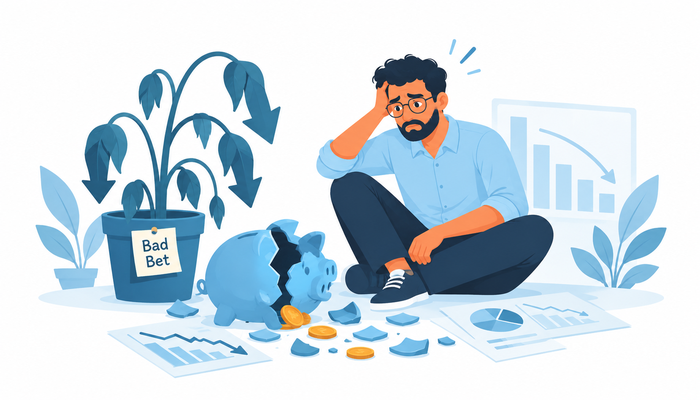
The Investment Decision I Regret: What I Learned About Investing Before Moving Abroad
The investment decision I regret most was not choosing the wrong country or buying the wrong asset. It was committing too much money before I had enough information.
At the time, the decision felt responsible. I had researched the opportunity, spoken with advisers, compared several options, and convinced myself that acting quickly would protect me from missing out. I believed that making a significant investment would give me stability, strengthen my relocation plan, and create a financial foundation in the new country.
What I did not understand was how much flexibility I was giving up.
Once the money was committed, every other decision became harder. I had less cash available for housing, business opportunities, unexpected expenses, and changes to the original plan. The investment itself did not destroy my finances, but it reduced my ability to respond when reality turned out differently from the assumptions I had made before moving.
The biggest lesson was not that investing abroad is a mistake. It was that liquidity, timing, and optionality can be more valuable than maximizing the size of the first investment.
I Treated Certainty as More Valuable Than Flexibility
Before relocating, uncertainty made me uncomfortable. I wanted to feel that I had already secured something tangible in the destination country. Committing capital gave me that feeling.
The problem was that the certainty was mostly psychological. I had locked money into one decision before I fully understood the market, my future expenses, or whether I would still want the same financial structure after living there for a year.
What I thought was stability actually became inflexibility.
A better approach would have been to preserve more liquid capital during the transition period. Moving abroad creates information quickly. Within a few months, you learn more about neighborhoods, business opportunities, taxation, banking, local costs, and your own preferences than you could learn from months of research from another country.
I made one of my largest financial decisions before gaining access to that information.
I Invested Before I Understood My Real Cost of Living
My pre-move budget looked detailed, but it was built on averages.
I had estimated rent, transport, insurance, food, and basic household expenses. What I had not accounted for properly were the concentrated costs of starting life in a new country. Deposits, temporary accommodation, furniture, administrative fees, insurance, professional advice, travel, and the hundreds of smaller purchases required to make a new home functional arrived much faster than expected.
The problem was not that I could not afford them. The problem was that a large portion of my capital was no longer easily available.
That changed the emotional experience of spending. Normal relocation costs began to feel threatening because the money I considered my financial safety net was tied up elsewhere.
If I were doing it again, I would not calculate only whether I could afford the investment. I would ask whether I could afford the investment and still remain financially comfortable if the first year cost substantially more than expected.
I Confused an Immigration Strategy With an Investment Strategy
Another mistake was allowing the relocation objective to influence how I evaluated the investment.
When an investment is connected to residence, business migration, or another immigration pathway, it is easy to give the asset additional value simply because it helps solve a legal problem. That can make a mediocre investment appear more attractive than it would be on its financial merits alone.
I should have separated the two decisions.
First, would I make this investment if it provided no immigration benefit?
Second, does the immigration benefit justify any additional cost, risk, or loss of liquidity?
I did not ask those questions clearly enough.
Instead, the residence objective and investment objective became one combined decision. That made it difficult to judge the investment honestly because I was not comparing it with other investments on equal terms.
The lesson was simple: an immigration advantage can be valuable, but it should never make the underlying financial risk invisible.
I Underestimated the Cost of Locked Capital
Before investing, I focused mainly on potential return. I looked at what the asset might earn or how its value could change.
I did not spend enough time thinking about what else the same money could do.
Capital has opportunity cost.
Money tied up in one investment cannot simultaneously fund a business, support a family during a career transition, cover an emergency, or allow you to take advantage of a better opportunity six months later.
After relocating, several opportunities appeared that I had not predicted. Some were business-related. Others were simply ways to improve our living situation. I could participate in them, but not with the same freedom I would have had if I had kept more capital liquid.
The investment therefore had a second cost that never appeared in the original calculation: the value of the opportunities I had to decline.
Practical Example: The Better Opportunity Came Later
Imagine someone relocating with €400,000 in available capital. Before moving, they invest €300,000 because they believe it is the safest way to establish themselves financially.
Six months after arrival, they discover a small business that fits their professional experience perfectly. The owner is retiring, the company has recurring customers, and the acquisition price is reasonable.
On paper, the opportunity fits the person far better than the original investment.
The problem is that most of their capital is already committed. Selling the original investment quickly may create costs, losses, or complications, while borrowing for the new opportunity may make the economics unattractive.
Nothing was necessarily wrong with the first investment. The mistake was using most of the available capital before the person had lived in the market long enough to discover better options.
That is close to what I learned. Good opportunities do not always appear before the move. Sometimes the most valuable information arrives after you have already committed yourself.
I Focused Too Much on the Best-Case Scenario
My original calculations were optimistic without looking obviously unrealistic. I did not assume extraordinary returns or perfect market conditions.
The mistake was subtler.
I assumed the investment would perform reasonably, my personal expenses would remain close to budget, and my income would develop roughly according to plan. Each assumption looked sensible individually. Together, they created a scenario with very little margin for surprise.
Real life produced several small deviations. Costs were higher. Income took longer to stabilize. Some expenses arrived earlier than expected.
None of those events alone would have created a problem. The lack of flexibility made them feel much larger.
Now I pay more attention to the downside scenario. What if income is delayed for a year? What if the asset produces no return during that period? What if an emergency requires substantial cash? What if I want to leave the country earlier than planned?
A good investment plan should survive more than the expected scenario.
I Did Not Value Liquidity Enough
Before moving, I thought of cash as money that was not working.
After moving, I understood that liquidity has its own return.
It gives you time.
It gives you negotiating power.
It lets you avoid selling assets under pressure.
It allows you to change plans without turning every unexpected event into a financial crisis.
There is obviously a cost to holding too much idle cash over long periods. But during a major transition such as international relocation, the value of liquidity can be unusually high.
The first year abroad is often a period of rapid learning. Locking most available capital before that learning happens can create unnecessary risk.
I Relied Too Much on Other People's Confidence
I also made the mistake of treating confidence from other people as evidence.
Advisers, brokers, friends, and other investors could all explain why the investment made sense. Some had genuine expertise. Others were simply optimistic.
The problem was not that anyone forced me into the decision. I was responsible for it.
But hearing similar positive opinions repeatedly made the investment feel more certain than it actually was.
I should have spent more time looking for reasons not to invest. What assumptions would need to be wrong for the decision to disappoint me? What risks were people minimizing because they were common? Who benefited financially if I completed the transaction?
Good due diligence is not about collecting enough information to feel comfortable. It is about trying to disprove your own thesis before committing capital.
I Failed to Separate Family Security From Investment Capital
This became especially important after relocation.
I had mentally categorized almost all available funds as investment capital, even though part of that money was effectively the family's security reserve.
Those are not the same thing.
Investment capital can accept volatility and longer time horizons. A family emergency fund needs accessibility and predictability.
Combining the two made me more conservative after the investment, not less. Because so much capital was committed, I became reluctant to take other reasonable risks in my career and business.
Ironically, an investment intended to create security reduced my willingness to pursue opportunities.
If I were planning again, I would define the family reserve first and treat it as unavailable for investment. Only after that amount was protected would I decide how much capital could genuinely be locked away.
I Should Have Waited Until I Understood the Country Better
Research helped me understand the destination. Living there taught me what actually mattered.
I learned which locations were practical, which costs were exaggerated online, which costs were underestimated, how local professionals operated, and what opportunities existed beyond the obvious ones.
I also learned more about my own priorities.
Some things I had considered essential before moving became unimportant. Other factors I had barely considered became central to daily life.
Waiting six or twelve months before making the largest investment would have given me a much stronger information advantage.
Not every investment allows that timing, and sometimes acting earlier is rational. But I had treated delay as if it were automatically a mistake. In reality, waiting can be an active strategy when the information you expect to gain is valuable.
What Nobody Tells You About Investing During Relocation
Relocation changes your relationship with money.
Before moving, an investment may look like a financial decision. After moving, the same capital can represent time, safety, career flexibility, and the ability to remain in the country while you figure things out.
That makes conventional investment logic incomplete.
The highest expected return may not be the best choice during a transition. A lower-return but more flexible structure may create more real value because it protects your ability to adapt.
This is especially true for entrepreneurs. The most valuable opportunity may be a business you have not discovered yet, and the capital needed for it may be the capital you are currently considering locking away.
What I Would Do Differently Now
If I were making the decision again, I would begin by protecting personal and family liquidity. I would calculate at least a full year of realistic living and transition costs, including a margin for expenses I had not predicted, and keep that money separate from investment capital.
I would then evaluate the investment without considering immigration benefits first. If it still made financial sense, I would add the immigration value back into the analysis rather than using it to justify the investment from the beginning.
Most importantly, I would invest in stages whenever possible. Instead of committing most available capital immediately, I would preserve the ability to change direction after learning more about the country, market, and my own plans.
The regret was not that I invested. It was that I made the decision too early and too completely.
Conclusion: The Investment Was Not Bad, but the Timing Was
The investment decision I regret taught me that financial planning before relocation is less about finding the perfect asset and more about preserving the ability to respond to uncertainty.
I committed too much capital before understanding my real cost of living, the local market, and the opportunities that would appear after arrival. I also allowed the immigration objective to influence the financial analysis and underestimated the value of liquidity during a period of major change.
If I were making the same decision today, I would ask a different question. Instead of asking, “Can I afford this investment?” I would ask, “If I make this investment and the next year looks very different from what I expect, how much freedom will I still have?”
That question would have led me to a smaller initial commitment, a stronger reserve, and a much more flexible relocation plan.
FAQ
What was the biggest investment mistake?
The biggest mistake was committing too much capital before having enough information about living costs, the local market, and future opportunities.
Why is liquidity important when moving abroad?
Liquidity gives you flexibility to cover unexpected expenses, change plans, pursue new opportunities, and avoid selling investments under pressure.
Should immigration benefits influence an investment decision?
They can be part of the analysis, but the underlying investment should still be evaluated on its own financial risks, returns, and liquidity.
How much money should remain outside an investment?
There is no universal amount, but personal living costs, relocation expenses, emergencies, and business needs should be protected before deciding how much capital can safely be locked away.
Is waiting before investing abroad a bad idea?
Not necessarily. Waiting can give you better information about the market, costs, neighborhoods, and opportunities before making a large commitment.
What is the main lesson from a regretted investment decision?
Do not judge an investment only by potential return. Consider timing, liquidity, opportunity cost, and how much flexibility remains if your relocation does not unfold as expected.