Why My First Business Abroad Failed
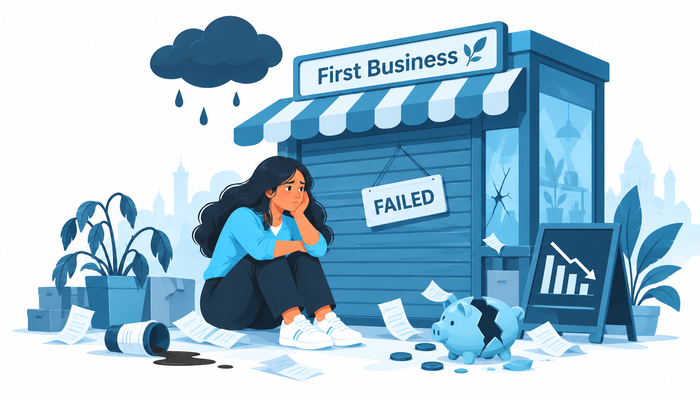
Why My First Business Abroad Failed: The Lessons I Wish I Knew Earlier
My first business abroad did not fail because the idea was completely wrong. It failed because I assumed that a business model that made sense to me would automatically make sense in a new market. I had experience, a clear offer, and enough confidence to believe I could figure things out after arrival. What I did not have was enough local evidence. I had not tested demand deeply enough, understood how long trust would take to build, or calculated how much slower everything becomes when you are learning a country and running a business at the same time.
Looking back, the failure was not caused by one dramatic mistake. It was a sequence of smaller decisions that looked reasonable individually but became dangerous together. I spent too early, expected revenue too quickly, broadened the offer too much, and allowed the relocation itself to create pressure on the company. The biggest lesson was simple: moving abroad does not validate a business. It only gives you a new market in which every important assumption has to be tested again.
I Chose the Destination Before I Truly Validated the Market
My first mistake happened before the move. I chose the country partly because the lifestyle appealed to me and partly because the legal path seemed workable. I had researched competitors and market size, but I had not spoken with enough real customers. I knew the market existed, yet I did not know whether the exact people I wanted to sell to cared enough about my offer to pay for it.
Once I started selling locally, I discovered that customers had different priorities, buying habits, and expectations around price and trust. Some liked the service but did not see the problem as urgent. Others preferred existing suppliers. I had confused general market potential with direct demand for my specific offer.
If I were starting again, I would validate the business before relocating. I would speak with potential customers, test pricing, and try to secure pilot work or early commitments first. I would want proof that the market was responding, not just evidence that the market existed.
I Overestimated How Much My Previous Experience Would Matter
I moved with professional experience and assumed that would shorten the trust-building process. It helped, but much less than I expected. In my previous market, people understood my background and references. In the new country, those signals meant less because nobody knew me and my experience did not automatically translate into local credibility.
Clients wanted proof that I understood their market and confidence that I would still be there after a few months. I had thought I was arriving as an experienced professional, but many potential clients saw an unknown founder entering their market for the first time.
The lesson was that experience has to be translated. I should have focused earlier on local case studies, partnerships, and clearer explanations of how my past results applied to the new market.
I Spent Money Before the Business Had Earned the Right to Scale
The most damaging mistake was financial. I spent as if I were setting up a business that had already proven itself. I paid for branding, software, professional services, travel, and tools because I wanted the company to look established. At the same time, relocation created another layer of spending through housing deposits, insurance, transport, and basic living costs.
Together, those expenses shortened my runway much faster than expected. The business was still learning the market while I had already created a cost structure that assumed growth. Every slow month felt urgent, and that pressure pushed me toward short-term decisions instead of patient testing.
If I were doing it again, I would separate business runway from personal runway and keep fixed costs low until repeatable demand appeared. A new market does not reward you for looking established. It rewards you for learning quickly enough to find customers before the money runs out.
I Tried to Serve Too Many Customers
I also kept the offer too broad. I thought flexibility would create more opportunities, so I positioned the business for several customer types. In practice, that weakened the message because each group had different problems, budgets, and buying processes.
Once I narrowed the customer profile, conversations became easier because the business finally had a clear problem to solve. That taught me that a new market rewards focus more than range. It is easier to become known for solving one specific problem for one clear group than to present yourself as a business that can do many things.
I Mistook Activity for Traction
One of the hardest lessons was realizing that I had been extremely busy without creating enough commercial progress. I attended events, changed the website, spoke with advisers, adjusted pricing, researched competitors, and tested marketing channels. My calendar was full, so the business felt active.
The numbers told a different story. There were too few signed contracts, too little repeat revenue, and not enough evidence that customer acquisition was becoming easier. I had confused effort with traction. Meetings were activity; qualified leads were progress. Website changes were activity; repeat customers were progress.
That distinction matters when money is limited. A founder can work twelve hours a day and still move the business sideways. The right metrics should show whether the company is becoming more predictable, not whether the founder is exhausted.
I Underestimated Language and Local Business Culture
I knew language would matter, but I treated it mainly as a personal integration issue rather than a business issue. That was a mistake. Even when I could operate in English, local language affected trust, networking, administration, supplier conversations, and the quality of relationships I could build.
Business culture mattered too. The pace of decisions, communication style, and expectations around professionalism differed from what I was used to. Entering a new market is not just about translating your website; it is about learning how customers make decisions. If the business depends on local clients, language and culture should be treated as commercial capabilities from the beginning.
I Let the Relocation Put Too Much Pressure on the Business
The business was also connected to my decision to live abroad, and that created emotional pressure. I wanted the company to succeed because I wanted the move itself to feel justified. That made it harder to evaluate the business objectively.
When revenue was slow, I sometimes treated the problem as temporary because admitting the model was weak felt too close to admitting the relocation had been a mistake. Those are different questions. A business can fail while the decision to move remains right, and a successful business can still exist in a country that is wrong for you personally.
Separating those questions would have helped me make faster decisions. The business needed to be judged on customers, revenue, margins, and cash. The relocation needed to be judged on quality of life and long-term fit.
I Scaled Before I Had Repeatability
When I finally saw some positive results, I moved too quickly. A few good customers made me believe the model had been proven, so I added costs and planned for growth. In reality, I had not yet understood why those customers had bought or whether I could find similar ones consistently.
Before scaling, I should have understood the pattern behind the sales. Which customers converted? How long did the process take? Why did they buy? Did they stay? Could I repeat the process without relying on personal introductions or luck?
Growth should come after repeatability. I did it in the opposite order, and the extra costs made the weakness of the model more expensive.
I Did Not Create Clear Stop Rules
The final mistake was continuing for too long without objective decision points. I had goals, but I had not defined what would happen if those goals were missed. Every month I believed the next month might be different, so I kept adjusting small things instead of asking whether the model itself needed a serious change.
A better plan would have created checkpoints around revenue, customer acquisition, cash runway, and repeat sales. If those numbers failed to improve after a defined period, the plan should change. A stop rule is not pessimistic; it protects the founder from making decisions only when the bank balance is already creating panic.
What Nobody Told Me About Failing Abroad
Business failure abroad feels more personal because the business is tied to a much larger life decision. If you have relocated, spent savings, or moved with family, closing the company can feel like admitting that everything was wrong. That emotional weight can keep founders in weak businesses longer than they should stay.
The most useful realization was that the business and the relocation had to be judged separately. The company could fail and still teach me something valuable about the market and the kind of business I should build next.
What I Would Do Differently Now
If I were starting abroad again, I would validate the market before moving, enter with a narrower offer, and protect far more cash. I would separate personal and business reserves, keep fixed costs low, and spend the first months talking to customers rather than building unnecessary infrastructure.
I would also take local language, business culture, and relationship-building more seriously, use local experts earlier where mistakes could become expensive, and define review points at three, six, and twelve months. Most importantly, I would wait until customer acquisition, revenue, and retention showed a repeatable pattern before expanding.
Conclusion: I Moved Faster Than I Learned
My first business abroad failed because I moved faster than I learned. I chose the destination before validating demand deeply enough, spent too much before revenue became stable, and expected my experience to transfer more easily than it did. I underestimated local trust, language, and culture, and I expanded before the sales process was repeatable.
None of those mistakes looked fatal on their own. Together, they created a business with too much pressure and too little evidence.
If I were starting again, I would ask one question much earlier: What proof do I have that this business will work in this market before I spend the money required to find out?
That question would not guarantee success, but it would make failure cheaper, learning faster, and the next decision much clearer.
FAQ
Why do businesses often fail after moving abroad?
Common reasons include weak market validation, insufficient runway, misunderstanding customer behavior, poor local trust, language barriers, and scaling before demand becomes repeatable.
Should I validate a business before relocating?
Yes. Customer interviews, pilot projects, paid tests, or early contracts can reveal whether real demand exists before relocation costs increase the pressure.
How much runway should an international founder have?
There is no universal amount, but business operating capital and personal living reserves should be calculated separately and should allow for slower-than-expected sales.
Can a good business model fail in another country?
Yes. Customer priorities, pricing, competition, trust, regulation, and buying behavior can differ enough to change the economics of the same business model.
Is language important when starting a business abroad?
It depends on the market, but local language can affect sales, networking, administration, supplier relationships, and customer trust even when English is widely used.
What is the biggest lesson from a failed business abroad?
Treat international entrepreneurship as a new market entry and test major assumptions again instead of assuming previous success will transfer automatically.