My Biggest Mistake During Family Reunification
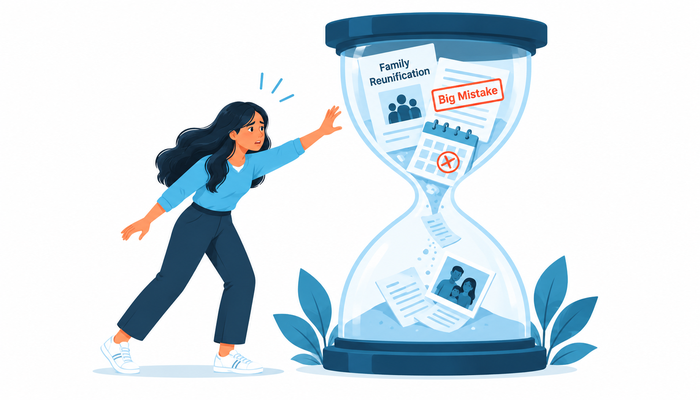
My Biggest Mistake During Family Reunification—and What I Would Do Differently
My biggest mistake during family reunification was thinking the hard part would be getting the visa approved.
I treated the process like an administrative project.
Collect the documents. Prove the relationship. Meet the financial requirements. Submit the application. Wait for the decision. Book the flight.
I assumed that once my family arrived, the difficult part would be over.
It was not.
The real mistake was focusing so much on getting everyone into the same country that I did not spend enough time planning what our life would look like once we were finally together.
I had prepared for immigration.
I had not prepared for reunification.
Those are not the same thing.
I Planned the Application Better Than the Family's Arrival
During the application process, I was organized.
I knew which documents were missing.
I tracked appointments.
I checked passport validity.
I thought about housing evidence, financial records, and the documents proving our relationship.
But I did not create the same level of detail for the first three months after arrival.
Where would my spouse look for work?
How quickly could the children enter school?
Would our apartment still feel suitable once everyone was living there?
How much money would we need before a second income appeared?
Who would handle daily administration while I was working?
Those questions felt like things we could solve later.
That was the problem.
By the time “later” arrived, we were already tired from the migration process.
I Assumed Living Together Again Would Automatically Feel Normal
Family separation is difficult.
Because of that, I imagined reunification as the finish line.
Once we were living under the same roof again, I thought life would quickly return to normal.
Instead, we discovered that the old version of normal no longer existed.
I already had routines in the new country.
I knew how to get to work.
I understood the transport system.
I had colleagues and a basic social structure.
My family arrived without any of that.
We were physically together, but we were not starting from the same position.
That created a mismatch I had not expected.
I felt as though we had finally completed the transition.
For them, the transition had just begun.
I Underestimated How Different Our Timelines Would Be
This was probably the most important lesson.
The person who moves first gets a head start on adaptation.
By the time the family joins, the sponsor may already understand the city, workplace, local bureaucracy, and basic daily life.
The arriving spouse and children do not.
They need time to build their own relationship with the new country.
That difference can create frustration on both sides.
The person already settled may wonder why everything still feels difficult.
The arriving family may feel pressured to catch up.
I should have expected separate adjustment timelines from the beginning.
Family reunification brings people back together physically.
It does not synchronize their adaptation automatically.
Practical Example: Amir Thinks the Difficult Part Is Finished
Imagine Amir moves to Germany for work.
Six months later, his spouse, Sara, and their child join him through family reunification.
Amir has already found a permanent apartment, opened a bank account, learned his commute, and become comfortable at work.
For him, life feels relatively stable.
When Sara arrives, Amir expects the family to settle quickly because most of the practical foundation already exists.
But Sara does not know the local language well enough to handle appointments confidently. She has left a job she liked. She does not yet understand the local job market. Their child is nervous about school.
Amir interprets their stress as a short-term reaction.
Sara experiences it as the beginning of an entirely new life.
Neither person is wrong.
They are simply standing at different points in the migration process.
That was the kind of mismatch I failed to plan for.
I Did Not Build a Real Plan for the Second Career
Before reunification, I focused on whether my spouse would have permission to work.
That was necessary, but incomplete.
Legal work rights do not create a career automatically.
The more important questions were whether employers would value previous experience, whether local language would be necessary, whether qualifications would need recognition, and whether the city had enough opportunities in that profession.
I should have researched all of that before the move.
Instead, the career plan began after arrival.
That added unnecessary pressure.
There is a major psychological difference between arriving with a six-month strategy and arriving with the vague expectation that “you'll find something.”
The first gives the spouse direction.
The second can quickly feel like professional limbo.
I Chose Housing for One Person and Expected It to Work for a Family
When I first moved, my housing priorities were simple.
Reasonable rent.
Easy commute.
Enough space for me.
Then the family arrived.
Suddenly, the apartment had to do much more.
It needed to work for children.
School access mattered.
Storage mattered.
Noise mattered.
Nearby parks and supermarkets mattered.
The commute of the second adult mattered.
What had been a perfectly good apartment for one person became less practical for a household.
This taught me that family housing should be evaluated from the family's daily routine, not from the sponsor's temporary routine before reunification.
If the family is expected to arrive soon, it can be worth choosing housing slightly later rather than signing a long contract for a place optimized for one adult.
I Assumed One Salary Would Feel Safer Than It Did
On paper, our finances looked manageable.
My income could support the household.
That gave me confidence.
What I underestimated was the difference between surviving on one income and feeling secure on one income.
After reunification, expenses increased immediately.
Food.
Transport.
School-related costs.
Furniture.
Clothing.
Language classes.
Administrative fees.
Visits home.
Unexpected household purchases.
None of those expenses individually destroyed the budget.
Together, they reduced our flexibility.
The bigger problem was psychological.
When the whole family depends on one salary, every workplace issue feels more serious.
That made me realize why financial runway matters even when the sponsor's salary technically covers the household.
I Did Not Separate Relocation Money From Emergency Savings
This was another financial mistake.
We had savings.
But too much of it disappeared during the move itself.
Flights, deposits, furniture, temporary expenses, documents, and setup costs all came from the same pool.
By the time everyone was settled, the emergency reserve was smaller than I wanted.
That reduced our freedom.
If my job had ended or we had needed to move again, the household would have been under much more pressure.
If I were doing it again, I would separate three budgets from the beginning: the cost of completing reunification, the cost of setting up the family home, and the emergency fund that should remain untouched after arrival.
Those are three different financial jobs.
I Thought Children Would Adapt Automatically
I heard the same phrase repeatedly:
“Children adapt quickly.”
Sometimes they do.
But that statement can make parents underestimate what children are going through.
Our child had not chosen the country.
They had not chosen the school.
They had not decided to leave friends and relatives behind.
Adults had made those decisions.
The child then had to learn a new environment and possibly a new language while everyone expected adaptation to happen naturally.
I should have prepared more deliberately.
Not only school documents, but also the emotional transition.
Talking about what would change.
Maintaining regular contact with people back home.
Creating familiar routines immediately after arrival.
Giving the child time before deciding whether the move was “going well.”
Children may adapt faster in some areas, but they still need support.
I Made Language Too Much of an Individual Problem
At first, language learning felt like something each family member could solve separately.
That was too passive.
Language directly affected independence.
The person who spoke the local language best became responsible for more tasks.
Phone calls.
Appointments.
School communication.
Government letters.
Landlord conversations.
That created an imbalance.
The slower one adult became independent linguistically, the more responsibility moved toward the other.
I learned that language needs to be part of the family plan.
Not because everyone must become fluent immediately.
But because each adult should gradually become capable of handling normal daily life independently.
I Did Not Expect Reunification to Change Our Relationship
Long-distance separation creates one kind of relationship.
Living together after migration creates another.
During separation, conversations often focus on when the family will finally be reunited.
That shared goal can hide smaller disagreements.
After arrival, those disagreements return inside a much more stressful environment.
Who handles school?
Who sacrifices work time?
Who manages documents?
Who has more freedom?
Whose career gets priority?
Who is making the bigger sacrifice?
These questions can create resentment if they are never discussed directly.
The visa application proves that a relationship exists.
It does not prepare the couple for how migration may redistribute responsibilities inside that relationship.
I Focused Too Much on the Legal Route and Not Enough on Independence
Before reunification, I cared about one thing: whether the family could legally join me.
After arrival, I realized the better long-term question was how each person could become more independent.
Could my spouse build a career?
Could they manage appointments alone?
Could they travel around the city confidently?
Could the children function at school without constantly relying on us?
Could the household eventually survive if one income disappeared?
This changed how I thought about successful reunification.
The goal is not simply getting everyone onto the same residence file.
The goal is creating a household where each person gradually gains stability and options.
What Nobody Tells You About Family Reunification
Family reunification has a strange emotional structure.
You spend months imagining that approval will bring relief.
Then approval arrives, and suddenly an entirely new set of responsibilities appears.
The family is together, which is deeply important.
But now you have to build normal life.
That is often less dramatic than the visa process and much more demanding.
There is no embassy appointment that confirms the spouse has found professional confidence.
No residence card proves that the child feels at home at school.
No approval letter tells you whether the family's budget is sustainable.
Those things take time.
That is what I wish I had understood earlier.
I Should Have Created a 90-Day Reunification Plan
If I could redo the process, I would create a detailed first-90-days plan before the family arrived.
The first month would focus on stability: residence formalities, healthcare, school, housing, transport, banking, and daily routines.
The second month would focus more heavily on language, social connections, and the spouse's career preparation.
The third month would focus on building independence: job applications, professional networking, children's activities, and reducing reliance on one family member for every administrative task.
I would not expect everything to be solved in 90 days.
The purpose would simply be to make sure the family was moving forward rather than reacting to problems one at a time.
I Would Also Set a Six-Month Review
Families often ask whether the move was successful too early.
I would now wait long enough for patterns to become visible.
After six months, I would review each person separately.
Is the spouse moving toward work or another meaningful professional goal?
Are the children becoming more comfortable socially and academically?
Is the budget sustainable?
Is housing still suitable?
Are language skills improving?
Does one person still carry most of the household's administrative burden?
These questions provide much more useful information than simply asking whether everyone likes the new country.
Family Reunification Checklist
Before the family arrives, confirm the current immigration and work conditions for each family member through the relevant official authority.
Then create a plan for housing, school, healthcare, language, and the spouse's career before booking the final move.
Keep relocation costs separate from emergency savings and assume that a second income may take time.
Think about the family member arriving, not only the sponsor already living abroad.
Finally, create milestones for the first three, six, and twelve months so the household can measure whether each person is becoming more stable and independent.
Conclusion: My Biggest Mistake Was Treating Reunification as the Finish Line
The biggest mistake I made during family reunification was believing that approval meant the difficult part was over.
It did not.
Approval solved the legal problem of living together.
Then we had to solve the practical problem of building a life together.
My spouse needed a career path.
The children needed school and belonging.
Our home needed to work for a family rather than one person.
Our finances needed more resilience.
Our relationship needed new agreements about responsibility and sacrifice.
For Germany, Spain, Italy, or any other destination, the legal requirements for family reunification, work rights, and residence can vary significantly and change over time. Those rules should always be checked through current official sources before making major decisions.
But the biggest lesson goes beyond immigration law.
Do not prepare only for your family's arrival.
Prepare for their first year.
If I had done that from the beginning, family reunification would have felt much less like starting another migration process immediately after finishing the first one.
FAQ
What is the biggest mistake people make during family reunification?
A major mistake is focusing entirely on visa approval while failing to prepare for the spouse's career, children's adjustment, housing, finances, language, and daily life after arrival.
Is family reunification complete once the visa is approved?
Legally, approval is a major step. Practically, the household still needs to rebuild routines, careers, school life, finances, and independence after arrival.
Should the spouse have a career plan before moving?
Yes. Legal permission to work does not guarantee easy employment, so language, qualification recognition, local demand, and job-search strategy should be researched before relocation.
How much savings should a family keep after reunification?
There is no universal amount, but relocation spending should ideally leave a separate emergency reserve that can cover unexpected housing, employment, or family expenses.
Do children usually adapt quickly after family reunification?
Some do, but adaptation varies by age, language, personality, school environment, and previous experiences. Fast language learning does not mean the child has no emotional difficulty.
Why can family reunification create relationship stress?
Migration can redistribute income, career opportunities, household responsibilities, language power, and independence between partners, which can create tension if expectations are not discussed.
How can families prepare better for reunification?
Create a first-90-days plan covering residence formalities, housing, healthcare, school, language, finances, and the spouse's path toward professional and practical independence.