The Challenge of Moving Abroad With Children
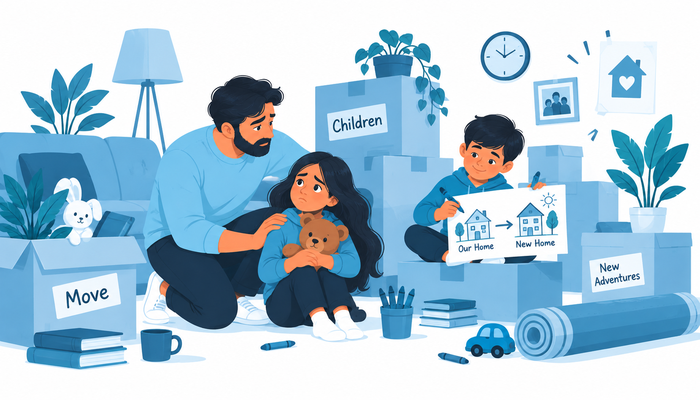
The Challenge of Moving Abroad With Children: What Parents Should Prepare For
Moving abroad with children can look exciting from an adult perspective.
A new country may offer a stronger career, better long-term opportunities, a safer environment, or access to a different education system.
Children often experience the same move very differently.
They are not usually thinking about residence permits, salaries, or long-term career strategy. They are thinking about their bedroom, their friends, their teacher, their grandparents, their sports team, and whether they will understand what people are saying at school.
That difference matters.
A family can make a relocation that is objectively sensible and still have a child who struggles during the transition.
This does not automatically mean the move was a mistake.
It means relocation affects children through loss, uncertainty, adaptation, and identity as much as through opportunity.
The most useful question is not:
“Will my children be fine?”
It is:
“What exactly will change in their daily life, and how can we make those changes easier to manage?”
Children Are Losing Something Even When the Move Is Positive
Parents naturally focus on what the family is gaining.
A better job.
A new school system.
Greater stability.
A stronger future.
Children may focus first on what they are losing.
Their closest friend is no longer ten minutes away.
Their grandparents are no longer part of normal weekends.
Their school routine disappears.
Their room is packed into boxes.
Even familiar food, weather, sounds, and small habits change.
Adults can understand that these losses are part of a larger opportunity.
Children may not yet have that perspective.
This is why telling a child only how exciting the new country will be can sometimes make adjustment harder.
They need permission to be sad about leaving while also becoming curious about what comes next.
Both reactions can exist at the same time.
School Is Often the Biggest Immediate Change
For many children, school becomes the center of the relocation experience.
It determines language exposure, friendships, routine, confidence, and whether they begin to feel that they belong.
That is why school planning should happen before the move whenever possible.
Parents need to understand the language of instruction, likely placement, enrollment process, commute, and what support is available for newly arrived students.
In Germany, for example, education is organized at state level, and official guidance recommends that international families ask whether a school provides support such as German as a second language for children who are not yet fluent.
In Spain, children entering compulsory education from foreign school systems are generally placed based on factors including age, previous studies, knowledge, and individual circumstances.
The broader lesson is that children do not simply “enter school.”
They enter a new academic and social system at the same time.
Language Can Temporarily Change a Child's Personality
This is one of the hardest things for parents to watch.
A confident child can become quiet after moving.
A talkative teenager may stop participating in class.
A child who was academically strong may suddenly look hesitant.
Sometimes the problem is not ability.
It is language.
Imagine being good at science but unable to explain your answer quickly enough.
Imagine having a joke in your head but not knowing the words.
Imagine wanting to join a group at lunch but being afraid you will misunderstand the conversation.
For children, this can feel like becoming less intelligent or less socially capable overnight.
Parents should be careful not to interpret temporary silence as a permanent personality change.
As language improves, confidence often returns.
Younger Children and Teenagers Can Experience the Move Very Differently
Age changes almost everything.
Younger children may struggle emotionally but often have more flexibility in language learning and academic adaptation.
They may enter a new school system before major examinations become important.
Teenagers face a different challenge.
They have deeper friendships, stronger identities, more academic pressure, and a greater awareness of social differences.
A teenager may understand perfectly why the family is moving and still resent it.
They may also face difficult curriculum transitions close to graduation or university applications.
That means one relocation strategy may not suit every child in the same family.
A seven-year-old and a sixteen-year-old can be making two completely different moves even though they are on the same flight.
Practical Example: Two Children, Two Different Transitions
Imagine a family moves from their home country to Germany with two children.
The younger child is eight.
The older child is fifteen.
After six months, the parents notice that the younger child speaks German quickly, has local friends, and seems increasingly comfortable.
The teenager is having a harder time.
Classes feel more demanding because of language.
Old friendships back home still feel more important than new ones.
The teenager also worries that changing academic systems will affect university plans.
If the parents compare the two children, they might assume the older one is “not adapting.”
That would be unfair.
The children are facing different challenges.
The younger child's main task is integration.
The older child's task includes integration, academic continuity, identity, friendships, and future planning.
The support should reflect that difference.
Friendships Take Longer Than Parents Expect
Parents often hope that once a child starts school, friendships will happen automatically.
Sometimes they do.
Sometimes they do not.
Being surrounded by other children is not the same as feeling included.
Language, cultural references, existing friendship groups, and personality all affect how quickly relationships form.
The first few weeks can therefore be lonely even when classmates are kind.
Repeated activities help.
Sports clubs, music lessons, art classes, neighborhood activities, and regular after-school routines give children more opportunities to meet the same people outside the pressure of the classroom.
Friendship often grows from repeated contact rather than one successful first day.
International Schools Solve Some Problems and Create Others
Some parents choose international schools to reduce language and curriculum disruption.
This can be helpful, especially for older children or families expecting another international move.
The child may study in a familiar language and meet classmates with similar relocation experiences.
But international schools do not eliminate adjustment.
The family may live far from classmates.
Friendship groups can be highly mobile.
Children may remain disconnected from the local language and neighborhood.
For a family planning to stay long term, that can become a trade-off.
Public school may create a harder first year but stronger local integration.
International school may create smoother academic continuity but weaker immersion.
The right answer depends on the child and the family's future plans.
Parents Can Accidentally Transfer Their Stress to Children
Children notice much more than adults think.
They hear conversations about money.
They notice when parents argue about housing.
They understand when one parent is unhappy at work.
They see frustration with bureaucracy, language, or loneliness.
Parents do not need to pretend everything is perfect.
But children should not become responsible for the emotional weight of the move.
Statements such as “We moved here for your future” can create enormous pressure.
A child who is unhappy may then feel guilty for struggling because the family made sacrifices partly for them.
A healthier message is that the move was an adult decision made for the household, and everyone is allowed to need time to adjust.
Routine Is One of the Best Forms of Stability
When everything else changes, routine gives children something predictable.
Meal times.
Bedtime.
Weekend activities.
Video calls with grandparents.
Sports practice.
A familiar breakfast.
These things can seem small compared with immigration and schooling.
For children, they can be extremely important.
A predictable home routine sends a message that although the environment changed, the family is still stable.
This is especially useful during the first months, when school and social life may still feel uncertain.
Parents do not need to recreate the old life exactly.
They need to preserve enough continuity that the new life does not feel completely unfamiliar.
Staying Connected to Home Can Help Without Preventing Integration
Families sometimes worry that too much contact with friends and relatives back home will stop children from integrating.
Usually, the issue is balance.
Regular contact can give children emotional security.
Grandparents remain part of their lives.
Old friendships do not disappear overnight.
Familiar language and cultural traditions remain available at home.
At the same time, children need space to build relationships in the new country.
The goal is not to force them to choose between an old identity and a new one.
They can keep both.
A healthy relocation often creates a broader identity rather than replacing the previous one.
The Spouse's Adjustment Affects the Children Too
Children do not experience relocation independently from their parents.
If one parent is isolated, professionally frustrated, or deeply unhappy, the household atmosphere changes.
This is why the spouse's career and social adjustment matter even when the article is supposedly about children.
A parent who has lost professional identity and social connection may have less emotional energy for school problems or daily routines.
A family relocation plan therefore needs to support the adults as well.
The more stable the household becomes, the easier it is for children to adapt.
Housing Can Affect Children's Adjustment More Than Expected
Where the family lives matters.
A larger home far from school may look financially sensible but leave children with long daily commutes and few nearby friends.
A smaller home in a neighborhood where classmates live nearby may create a much easier social life.
Housing also determines access to parks, sports, public transport, libraries, and activities.
This is why parents should evaluate a neighborhood through the child's weekday, not only through rent.
Can the child walk to school?
Can they meet friends independently as they get older?
Are activities nearby?
Will most social plans require a parent to drive?
These details can change how quickly the child feels that the new city belongs to them.
Academic Performance May Drop Temporarily
Parents can become alarmed when grades fall after relocation.
A temporary decline is not unusual.
The child may be learning a new language, new curriculum, different classroom behavior, and new expectations simultaneously.
Their cognitive ability did not disappear.
They are using significant mental energy simply to navigate the environment.
This is particularly important for high-achieving children who are used to being among the strongest students.
Suddenly needing extra support can affect confidence.
Parents should look for trends over time rather than judging the move from the first report card.
If difficulties continue, targeted language support, tutoring, or discussions with teachers may help identify whether the issue is adjustment or something more specific.
What Nobody Tells You About Moving Children Abroad
Children can adapt successfully and still miss their old life.
Those two things are not contradictory.
A child can speak the language, have friends, perform well at school, and still feel sad during holidays because grandparents are far away.
A teenager can appreciate the opportunities of the new country and still wish the family had never moved.
Parents often want a clear verdict:
Was the move good for the children or bad for them?
Real life is usually more complicated.
Migration can create both opportunity and loss.
Success is not the absence of difficult emotions.
It is the child's growing ability to function, connect, learn, and feel secure despite the change.
Signs the Transition May Need More Support
Most children need time.
But parents should still pay attention when difficulties remain intense or worsen.
A child who consistently refuses school, withdraws from activities they previously enjoyed, remains deeply isolated, or shows significant and persistent changes in sleep, eating, mood, or behavior may need additional support.
The first step can be talking with teachers or school support staff to understand what is happening during the day.
Families may also benefit from professional support when the adjustment is affecting the child's wellbeing or normal functioning.
The goal is not to label normal relocation stress as a problem.
It is to avoid assuming that every difficulty will disappear automatically.
A Better First-Year Plan for Children
The first year should be viewed as a transition period.
Before moving, involve children in age-appropriate decisions where possible.
Show them the neighborhood and school.
Talk honestly about what will change.
After arrival, prioritize routine, language support, and repeated social activities.
Do not overload the child's schedule in an attempt to force integration quickly.
Check in regularly, but avoid turning every conversation into “Do you like the new country yet?”
More useful questions are specific.
Who did you spend time with today?
Which class is easiest to understand?
What part of school feels hardest?
What do you miss most?
Specific questions give parents much better information than asking whether the move is going well.
Moving Abroad With Children Checklist
Before relocating, research the actual school options in the target city and understand the language and curriculum transition.
Consider each child's age separately rather than creating one education plan for all siblings.
Choose housing partly around school, activities, and the child's ability to build a local routine.
Preserve familiar family traditions while creating new routines after arrival.
Make space for continued contact with important people back home.
Finally, monitor adjustment over months rather than expecting children to become fully comfortable within the first few weeks.
Conclusion: Children Need More Than a Good Destination
Moving abroad can give children remarkable opportunities.
They may become multilingual, experience different cultures, develop confidence navigating change, and gain access to education and experiences their parents wanted for them.
But those benefits do not make the transition easy.
Children still leave behind people and places that matter to them.
They may struggle with language.
They may lose confidence temporarily.
They may need to rebuild friendships and academic identity from the beginning.
For families considering countries such as Germany, Spain, Italy, or elsewhere, school enrollment and education structures vary by region and should be checked through official local sources before relocation.
But the central challenge is human rather than administrative.
The best family migration plan does not assume:
“Children are adaptable, so they will be fine.”
It asks:
“What will this move require from our child, and what support can we put around them while they adapt?”
That difference can shape the entire experience.
FAQ
Is moving abroad difficult for children?
It can be. Children may face changes in school, language, friendships, routines, and family relationships even when the move creates positive long-term opportunities.
Do younger children adapt more easily?
They may learn a new language and school system more quickly, but age alone does not determine adjustment. Personality, school support, family stability, and previous experiences also matter.
Is public school or international school easier after relocation?
International schools may provide more language and curriculum continuity, while public schools can offer stronger local integration. The child's age and long-term plans matter.
How long does it take children to adjust after moving abroad?
There is no fixed timeline. Some children become comfortable within months, while others need much longer, especially when language or major academic transitions are involved.
Should children stay in contact with friends from home?
Yes. Maintaining important relationships can provide emotional continuity while children gradually build new connections locally.
Can school performance drop after an international move?
Yes. A temporary decline can happen while a child adapts to a new language, curriculum, classroom culture, and social environment.
What is the biggest mistake parents make when moving abroad with children?
One common mistake is assuming children will adapt automatically without recognizing the academic, social, linguistic, and emotional work the transition requires.