The Work Visa Mistake That Delayed My Move
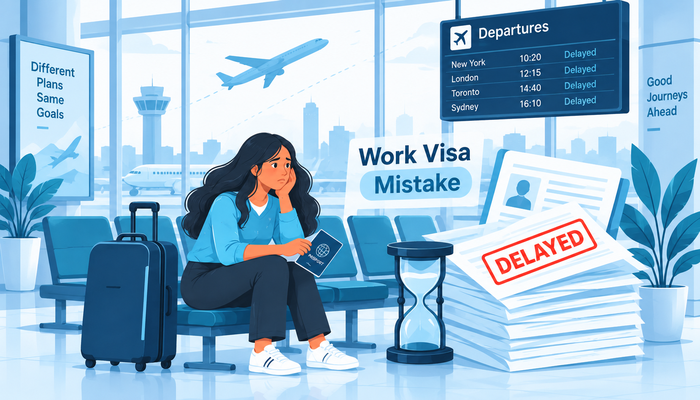
The Work Visa Mistake That Delayed My Move Abroad
The biggest mistake I made during my work visa journey was not submitting the wrong form.
It was starting with the visa before understanding the career and qualification steps that had to happen first.
I assumed the process would be straightforward. Find a suitable work visa, collect the documents, submit the application, and wait.
That sounded logical.
But I had started in the middle of the process.
Before I could realistically apply for the right work route, I needed to confirm how my qualification would be treated, whether my profession had additional requirements, what kind of job offer would qualify, how employers described my role, and how long each of those steps could take.
Because I ignored those dependencies, I lost time on research that did not move the application forward.
The delay was not caused by one dramatic problem.
It came from building the steps in the wrong order.
I Thought the Visa Was the Starting Point
My first instinct was to compare work visa options.
I looked at eligibility pages, residence categories, processing times, required documents, and salary conditions.
I wanted to know which route was the easiest and fastest.
The problem was that I still did not know whether my professional profile fit the route I was researching.
I had experience.
I had a degree.
I had a target country.
That felt like enough.
But immigration systems do not evaluate applicants based on whether their profile generally looks strong. They evaluate whether the specific qualification, occupation, employment relationship, and other conditions fit the legal route.
I should have started with a different question:
“What has to be true before this work visa becomes available to me?”
That would have immediately shown me which steps needed to happen first.
I Did Not Check Qualification Recognition Early Enough
This was the first major delay.
I knew that foreign qualifications could matter, but I treated recognition as something I would investigate after finding a job.
That was too late.
For some professions and work routes, the way a foreign qualification is recognized or compared can directly affect eligibility. In regulated professions, there may also be separate professional requirements before someone can actually practise.
I should have investigated this before building my application timeline.
Even if recognition is ultimately straightforward, the process can involve collecting documents, requesting academic records, obtaining translations, or waiting for an authority to review the qualification.
When those steps begin late, they can delay everything that comes after them.
The mistake was not that recognition existed.
The mistake was assuming it was a small administrative detail instead of a possible dependency.
I Researched Visa Processing Time Instead of Total Timeline
I became too focused on one number: how long the visa application itself might take.
That created a false sense of planning.
A visa might take a certain number of weeks after submission, but that does not tell you how long it takes to become ready to submit.
The full timeline can include qualification checks, language preparation, job searching, interviews, contract negotiation, employer paperwork, translations, appointments, and financial preparation.
In my case, several of those steps were happening one after another when they could have been started much earlier.
That added months.
Now I think about immigration timelines differently.
The useful timeline does not start on application day.
It starts from your current profile.
I Assumed Finding Any Job Offer Would Be Enough
Another mistake was treating the job offer as a simple checkbox.
I thought that once an employer wanted to hire me, the immigration side would become easy.
But not every job offer necessarily fits every work route.
The role itself may need to meet certain conditions. Salary can matter. Qualifications may need to match the role. Professional licensing can matter in regulated occupations.
That means the quality of the employment offer is important from an immigration perspective as well as a career perspective.
I should have researched this before interviews.
If I knew what kind of employment relationship I needed, I could have targeted companies and roles more carefully.
Instead, I initially treated immigration as something to solve after receiving an offer.
That made the job search less efficient.
Practical Example: Amir Loses Three Months
Imagine Amir is an engineer planning to move to Germany.
He has strong experience and begins applying broadly to employers.
After two months, he receives interest from a company.
Only then does he investigate how his qualification will be treated and discovers that he needs additional documentation from his university.
The university takes several weeks to issue it.
He then learns that some documents need to be translated.
Meanwhile, the employer asks for clarification about the immigration route and expected start date.
Nothing is fundamentally wrong with Amir's profile.
The problem is sequencing.
If Amir had investigated qualification requirements before or during the first weeks of his job search, those documents could already have been ready.
The same immigration route could still work.
But his move has been delayed because the dependency was discovered too late.
That is exactly the kind of mistake I made.
I Did Not Understand the Employer's Role
I also assumed that once a company agreed to hire internationally, it would know exactly what to do.
Some employers do.
Others do not.
A large company with international recruitment experience may have an internal mobility team or immigration provider. A smaller employer may be hiring a foreign worker for the first time.
That difference can affect the process.
I should have asked employers earlier what support they actually provided.
Would they prepare the required employment documents?
Did they have experience with international hires?
Would they use an immigration adviser?
Who was responsible for which part of the process?
Without those answers, both sides can assume the other person is handling something important.
That creates unnecessary delays.
I Waited Too Long to Prepare Documents
Another part of the problem was that I prepared documents only when someone requested them.
That sounds efficient because you avoid collecting unnecessary paperwork.
But some documents take time.
Academic records may need to be reissued. Employment certificates may need signatures from previous employers. Documents may require translation or other formal preparation.
A better approach is to divide documents into two groups.
The first group contains stable documents that can be prepared early, such as degree records, employment evidence, and basic identity documentation.
The second contains time-sensitive documents that should only be obtained when needed.
That small change makes the process much more efficient.
You prepare early without creating the risk of documents becoming outdated.
I Underestimated Language as a Timeline Issue
At first, I thought of language mostly as an employability issue.
Then I realized it was also a timeline issue.
If employers consistently expect a language level you do not yet have, you cannot solve that problem in two weeks.
Language improvement may require months.
That means it belongs near the beginning of the migration plan.
This is especially important in destinations such as Germany, Spain, or Italy, where an immigration route may technically be available while the actual job market for your profession still expects stronger local-language ability.
If I had tested the labor market earlier, I would have known whether language was a small advantage or a major bottleneck.
Instead, I discovered its importance gradually during applications.
I Applied Before Understanding the Local Job Market
I made another inefficient choice: I applied too broadly.
I searched for jobs across the entire country without first identifying where my industry was concentrated.
That produced a lot of applications but not enough useful feedback.
Once I researched the market more carefully, I noticed that certain regions had far more employers in my specialization.
That changed everything.
My job search became more focused. I could compare salaries more realistically, understand local language expectations, and identify alternative employers in the same area.
A work visa is connected to a job, and a job is connected to a labor market.
Ignoring the geography of that market made my early applications less effective.
The Real Problem Was Not Immigration Complexity
For a while, I blamed the delay on bureaucracy.
That was only partly fair.
The system had requirements, but most of my delay came from learning about those requirements too late.
I had not built a dependency map.
I did not know which task had to happen before another.
That is a planning problem.
If qualification recognition needs to happen before the relevant work route can move forward, start it early.
If the employer must provide documents, discuss that during the hiring process.
If language is affecting most of the jobs you want, address it before sending another hundred applications.
The system becomes easier to manage when the sequence is visible.
I Should Have Worked Backward From the Start Date
The better way to build a work visa timeline is to begin with the intended employment start date and move backward.
Suppose you hope to begin a job in September.
Before that, you need enough time for the immigration application and decision.
Before the application, you may need the employment contract and employer documents.
Before that, you need interviews and negotiation.
Before that, you may need qualification recognition, language improvement, or document preparation.
When you map the process backward, the hidden dependencies become obvious.
You also see which tasks can happen in parallel.
For example, language study, qualification research, and employer research can often begin at the same time.
My original process was far too sequential.
I completed one step, then discovered the next.
That is one of the slowest ways to manage an international move.
What Nobody Tells You About Work Visa Delays
Many work visa delays begin long before the visa application.
By the time you submit, the most important delays may already have happened.
You may have spent months targeting the wrong employers.
You may have waited to investigate recognition.
You may have underestimated language.
You may have accepted a job without understanding whether the role fits the immigration route.
This is why focusing only on embassy or immigration processing times can be misleading.
The more useful question is:
“What is the slowest dependency between my current profile and the day I can legally start work?”
That may have nothing to do with the visa office.
Once you identify that bottleneck, you know where to invest your time.
The Mistake Also Cost Me Negotiating Power
There was another consequence I did not expect.
When delays accumulate, you become more emotionally invested in making the opportunity work.
You have already spent months preparing.
You may have paid for documents, tests, translations, or professional services.
That can make you less willing to question the job offer.
You may accept a weaker salary or overlook concerns because you do not want to restart.
This is another reason early planning matters.
A well-prepared process gives you more freedom to evaluate the employer objectively.
A rushed process makes every offer feel too important.
What I Would Do Differently Now
If I were starting again, I would begin with my professional profile rather than a visa name.
I would confirm how my qualification and profession are treated in the destination. Then I would study real jobs and identify the salary, language, experience, and location patterns employers expect.
At the same time, I would prepare stable documents and identify anything likely to take weeks or months.
Only then would I build the immigration strategy around the employment opportunities that actually fit.
I would also ask employers early about immigration support and realistic start dates.
Most importantly, I would keep a timeline showing which tasks depend on which others.
That would have prevented most of my delay.
Work Visa Preparation Checklist
Before applying for jobs, understand whether your qualification needs recognition and whether your profession has additional licensing requirements.
Research real vacancies to learn what employers expect in terms of language, skills, salary, and experience.
Prepare stable documents early and identify anything that may require translation or third-party processing.
When speaking with employers, ask what immigration support they provide and what documents they will need to prepare.
Then build the full timeline backward from the intended employment start date rather than focusing only on visa processing time.
Finally, verify current work and residence requirements through official sources before submitting anything, because rules and thresholds can change.
Conclusion: My Biggest Mistake Was Starting in the Middle
The work visa mistake that delayed my move was surprisingly simple.
I started with the immigration application instead of the conditions that made the application possible.
I researched visa categories before checking qualification recognition.
I focused on processing time before understanding the full timeline.
I treated any job offer as enough before checking how the role fit the immigration route.
And I prepared documents only when they became urgent.
None of those mistakes destroyed the plan.
But together they made the process slower than it needed to be.
If I were beginning again, I would ask one question first:
“What has to be true before I am ready to apply?”
That question changes the entire process.
For current work visa, recognition, employment, and residence rules in Germany, Spain, Italy, or any other destination, the relevant official authorities should always be checked before making a final decision.
But the planning principle is universal.
Do not begin with the form.
Begin with the dependencies.
That is how you prevent a manageable work visa process from turning into an unnecessary delay.
FAQ
What is the most common work visa planning mistake?
A common mistake is researching the visa first without checking qualification recognition, job requirements, employer responsibilities, and other steps that must happen before submission.
Can qualification recognition delay a work visa?
Yes. Depending on the country, profession, and route, foreign qualifications may need assessment or formal recognition before the process can move forward.
Should I prepare documents before receiving a job offer?
Stable documents that take time to obtain can often be prepared early. Time-sensitive documents should generally be collected closer to when they are required.
Does any job offer qualify for a work visa?
Not necessarily. The role, salary, qualifications, and other employment conditions may need to meet the requirements of the specific route.
When should I ask an employer about visa support?
Early enough to understand what the company will handle and what remains your responsibility, especially once serious hiring discussions begin.
Is visa processing time the same as the total relocation timeline?
No. The full timeline can include qualification recognition, language preparation, job searching, interviews, employer paperwork, immigration processing, and relocation.
How can I avoid delaying my work visa process?
Map the process backward from your target start date, identify the slowest dependencies, prepare long-lead documents early, and verify current requirements before applying.